In light of the news about Charlie Kirk so many other important stories have fallen between the cracks.
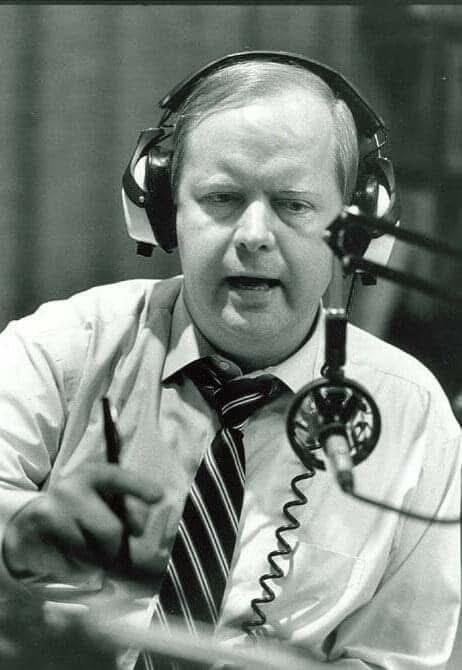
Bruce DuMont, a longtime host of the Beyond the Beltway political radio talk show; the founder of the Museum of Broadcast Communications; and a former television producer, host, and analyst died at the age of 81. He was a towering figure for broadcasters.
There are a number of worthy figures who have championed the soul of broadcasting and made the profession mighty proud. But near the top of the list there must be the name of Bruce DuMont. I read a great phrase this weekend that DuMont “was a masterclass in civic engagement through the airwaves”. His work at WGN radio in Chicago was what first caught my attention. As I learned more about him it was how he viewed radio in the context of our society that allowed me to admire him so very much. DuMont understood radio not merely as entertainment, but as a public square for ideas.
His most enduring contribution, however, came in 1987 with the founding of the Museum of Broadcast Communications. It is one of those places that was made for guys like me who can hear a radio personality from years long ago and recall the name of the broadcaster. The museum is a cultural institution that stands as both an archive, and I think it fair to say also an altar, to the voices that shaped America’s growth and development. This place didn’t just preserve tapes and transcripts, but it has also preserved the ethos of an era when broadcasting was a civic duty. Think about that for a moment. I know what it was like to grow up in a home where radio and a daily newspapers were the means to getting information and being entertained. So I can speak to the fact that radio is a living, breathing force in not only American identity but also the stuff that helped make the man I am today.
DuMont’s own show, Beyond the Beltway, was a syndicated political roundtable that aired for decades. I listened to it on Sunday nights on my drive back to Madison after a visit and dinner with my folks. What struck me again and again was his almost disdain on the airwaves for partisanship. You know what he craved? Great conversations. His format was one that I loved. There were four voices, two sides, one issue and none of the bombast and outrage and angry nasty rants that make up too many AM radio stations today.
I tell James repeatedly that radio is the most intimate form of communication in our nation. It’s the only medium that can speak directly to a trucker on I-39, a farmer on a tractor in Iola, and a commuter in Middleton. All at once. It is democratic in reach, and oh-so personal, in tone. As a former radio broadcaster and news reporter I know of what I write.
Radio is a most powerful instrument for communication and entertainment. And democracy. Bruce Dumont well understood that fact.

 Caffeinated Politics
Leave a comment