
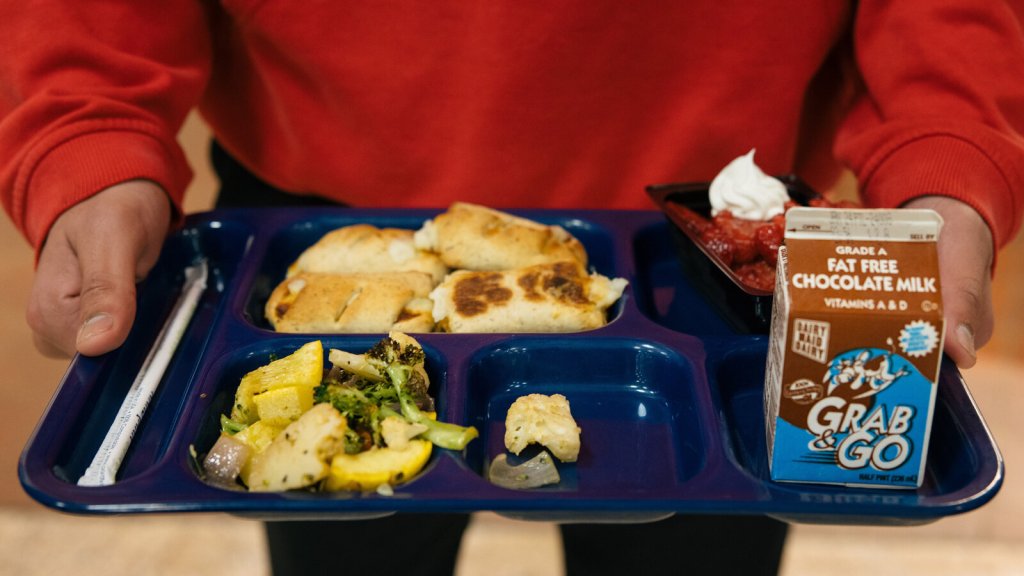
I stumbled upon a news story from WFHR, Wisconsin Rapids. (A radio station that was often heard in our home during my growing up years.) On one hand, it is an uplifting story of humanity reaching out to assist others. On the other hand, it underscores why there is a need for a statewide policy making school lunches free for all students. We simply must stop creating a caste system when it comes to feeding students in our public schools.
In many school districts, seniors who aren’t able to pay off lunch debt, or other debt they’ve accrued throughout their education aren’t allowed to cross the stage on graduation day.
They can even be taken to small claims court over these debts. GRACE is working to change that in South Wood County. The Greater Rapids Area Churches for Ecumenism is a group formed from several area churches. This year, they are again raising funds to help pay off student debt.
According to the Education Data Initiative, Wisconsin has 202,600 children who are considered food insecure. The school meal debt in the state is over $112-million. Schools cannot use federal child nutrition funds to pay off meal debts. They have to write it off as an operating loss if they aren’t able to collect the debt from students or their parents/guardians.
The U.S. Department of Agriculture doesn’t have much say over meal debt policy. It’s mainly left in the hands of state and local school officials and can vary from district to district. The only state-wide policy in Wisconsin is the state will pay an additional $0.15 for breakfast and lunch. 20.5 million students in the United States qualify for free school lunches. 900,000 pay a reduced price for school meals and only 8.3 million pay the full price.
Almost every day be it from newspaper articles or reports on radio and television we are mindful that there continues to be a growing need for some families to have food assistance to make it through this economically stressful time in our state and nation.
We also know from our years as youngsters or hearing current stories about kids in our family or those in our neighborhood, that kids can be very callous with remarks aimed at those who are somehow ‘different’ or apart from the whole. That list of targeted kids by bullies and those who have not learned how to temper their words include students who are not able to pay their way with school lunches. We all know the last thing a child needs are to have yet one more reason to feel smaller or not fitting in with the whole. If we can stop kids from feeling like they are looked down on because they need assistance, then that is a policy we need to embrace and push into law.
I abhor policies that damage those who are most vulnerable in our society. I place students, from their early years to the day of graduation, who through no fault of their own face embarrassment and worse from having not the means to pay for their school lunches in that vulnerable group. Growing up in a home with limited means should have no bearing on making sure the kid has a hot lunch with fellow classmates. As such, the rest of us must find a way to best educate and uplift our youth. That means fully supporting the free meals program.
We have sadly seen in recent years, such as in southeastern Wisconsin in August 2021, that not all school boards are primed to be our ‘brother’s keeper’. The Waukesha School District board decided to opt-out of a federally funded program that would have given free meals to all students regardless of family income. The rhetoric that flowed from the board meeting even included board members who stated the reason to stop what is termed ‘universal’ lunch programming was to prevent an “addiction” to the service. (Yes, shun the idea that a kid eating food might become an addiction.) It was lost on many in our state upon learning that news how it could be wrong to devise a universal way of allowing kids, who have fewer means, to have a school lunch with no guilt or bad feelings.
The fact is that food insecurity isn’t confined to the poorest zip codes. It’s a creeping crisis that affects working families, single parents, and even middle-class households squeezed by inflation and stagnant wages. So, when school meals are tied to income thresholds, many children fall through the cracks—too “rich” to qualify, too poor to afford lunch. Universal programs eliminate this bureaucratic cruelty and ensure no child is punished for their parents’ paycheck. (I cannot believe the need to even write these words.)
Critics often cite cost. But it does not take a college degree to know that a universal free lunch program would improve academic performance. I suspect in some urban centers such a policy would even increase attendance.
In my middle school years, a friend needed reduced lunches. Part of his way of paying for food was to be responsible for making sure all the garbage was picked up and the large plastic bags tied and placed in a corner. Along with another guy we would help him so he could have some free time with us before classes resumed. I recall how he expressed his unease with us helping him. He was embarrassed and frustrated. Kids know when they’re singled out. Lunch debt, cafeteria shaming, and the stigma of “free lunch” labels erode self-worth and lowers self-confidence. Universal programs restore dignity.
Finally, this issue is not left or right. It is simply about right and wrong. Let’s feed every child. No exceptions. No conditions. Just lunch.

 Caffeinated Politics
Leave a comment