
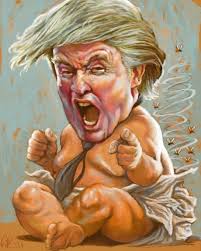
The United States has crossed a stark red line that cannot be blurred by spin or cheap patriotism theater. The invasion of Venezuela—launched without congressional authorization, without even the traditional courtesy of notifying the Gang of Eight—marks a rupture in American governance so profound that future historians will struggle to explain how a republic tolerated it. Simply put, we cannot and must not tolerate it.
International law is not a suggestion that we heed on certain days and toss aside like a McDonald’s wrapper the next. It is not a menu of optional selections. It is the fragile and long-crafted architecture that prevents powerful nations from behaving like marauders. Yet, here we are, watching Donald Trump send American forces into a sovereign nation while openly boasting that he is “not afraid of boots on the ground” when it comes to Venezuelan oil fields. This is not foreign policy. This is outright banditry dressed up as statecraft.
The hypocrisy is so clear that a blind person would instantly recognize it. Trump formally pardoned former Honduran president Juan Orlando Hernández only one month ago! He was serving a 45-year prison sentence for drug trafficking and weapons charges at the time of the pardon. That pardon was sold as a gesture of “stability,” a word that in this White House has become a euphemism for rewarding loyal authoritarians. But when it comes to Venezuela, suddenly, Trump, who rehabilitated a criminal strongman, claims to be the defender of democracy. The contradiction is jarring. It is simply the absolute absurdity of a leader who believes that wielding power is its own justification.
I must also address the pettiness that is on full display from Trump. Yes, I know we are shocked to learn of such behavior from him. He is a small, jealous man today, as he showed his disdain and contempt for Maria Corina Machado, the head of Venezuela’s democratic opposition. You probably recognize her as the 2025 Nobel Peace Prize for her courage, her nonviolent leadership, and her refusal to abandon her country’s future. Instead of respecting that achievement, Trump took the low road as he derided her, mocked her aspirations, and treated her legitimacy as a personal affront. Her international recognition seems to have triggered something deeper—a resentment that someone else, especially a woman who commands moral authority rather than brute force, has become the global face of Venezuelan democracy. The contrast is too much for him to bear, so he lashes out, belittles her, and then sends troops into her country as if to prove moral standing matters less than American firepower.
But the most dangerous part of this entire episode is not the swaggering rhetoric or the oil‑soaked justifications. It is the deliberate bypassing of international law on the global stage and constitutional order at home. The president did not seek authorization from Congress. He did not brief the Gang of Eight. He did not even pretend to respect the processes that exist precisely to prevent unilateral war-making. This is not a procedural oversight. This is a constitutional crisis. When a president deploys military force to remove the leader of another nation, without legal authority and without informing the very leaders tasked with oversight, he is not acting as a commander-in-chief. He is acting as a tyrant. A republic cannot function when its executive behaves like an authoritarian thug who treats the legislature as an inconvenience and international law as a speed bump.
Trump has proven yet again to be absurd, reckless, and dangerous. His actions late Friday night and early Saturday morning have eroded the credibility of the United States abroad and hollowed out democratic norms at home. It signals to the world that American power is no longer constrained by law, morality, or even basic strategic coherence. The foreign policy consequences that flow in all directions from this are enormous. How does our country stand on the world stage and, with a moral foundation, condemn Russian President Putin for his aggression in Ukraine? Or bluster with any conviction when Chinese Premier Xi threatens Taiwan with occupation.
This year, the argument about spheres of influence has again created a national and international debate. Traditionally, great powers have demanded a degree of deference from lesser powers on their borders and in adjacent seas. In a world of high connectivity with trade, investments, and migration patterns creating concerns worldwide, it is vital to reject and reduce the bellicosity of nations like Russia, China, and India. Now we must add to that list the United States of America.
The tragedy of what occurred today is the product of a leader who confuses strength with domination, diplomacy with humiliation, and national interest with personal grievance. Trump is a sick and dangerous tyrant. The invasion of Venezuela is not about democracy. It is not about stability. It is not even about oil, though oil is the convenient pretext. It is about an autocrat who believes he is entitled to reshape the world by force and who bristles at anyone—whether a Nobel laureate or a senator in Washington—who dares to challenge that delusion.
That is where we find ourselves in the opening days of 2026.


 Caffeinated Politics
Leave a comment