Last fall, at Barnes & Noble, thanks to a large display near an entrance to the bookstore, I first became aware of Alice Oseman, and the Heartstopper series. Several books of her work were prominently displayed, and I spent a few minutes reading a bit and exploring the overall tone and mission of them. Heartstopper follows two teenage boys, Nick and Charlie, as they meet at a British grammar school, quickly become friends, and fall in love. Each volume navigates the ups and downs of first love, friendships, coming out, and mental health, beautifully framed by a warm cast of supporting characters. The graphic novels, which first started in 2019, have resonated worldwide, with over one million print copies sold.
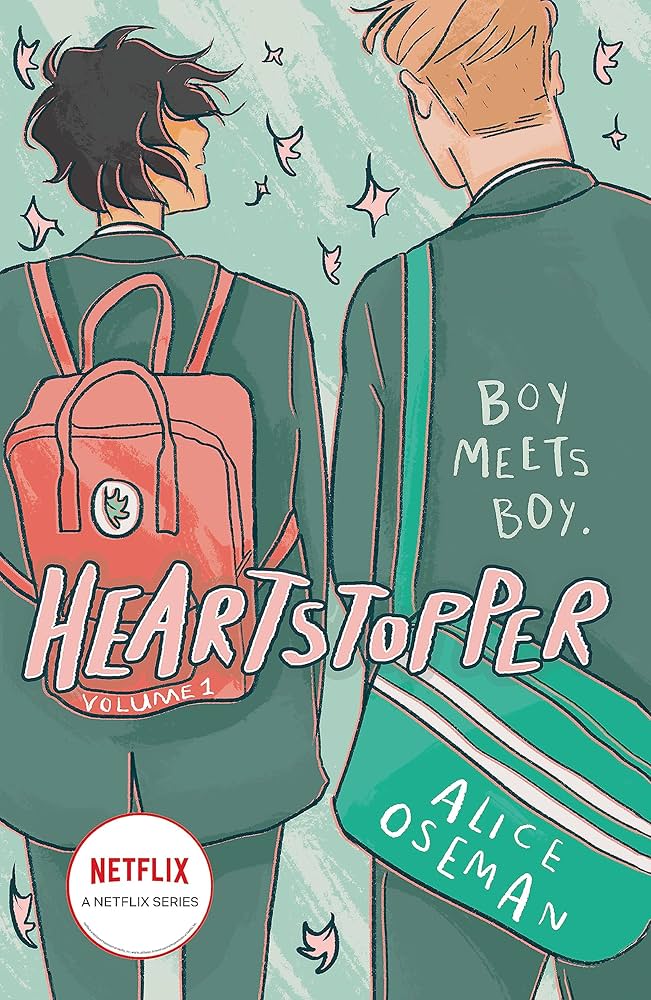
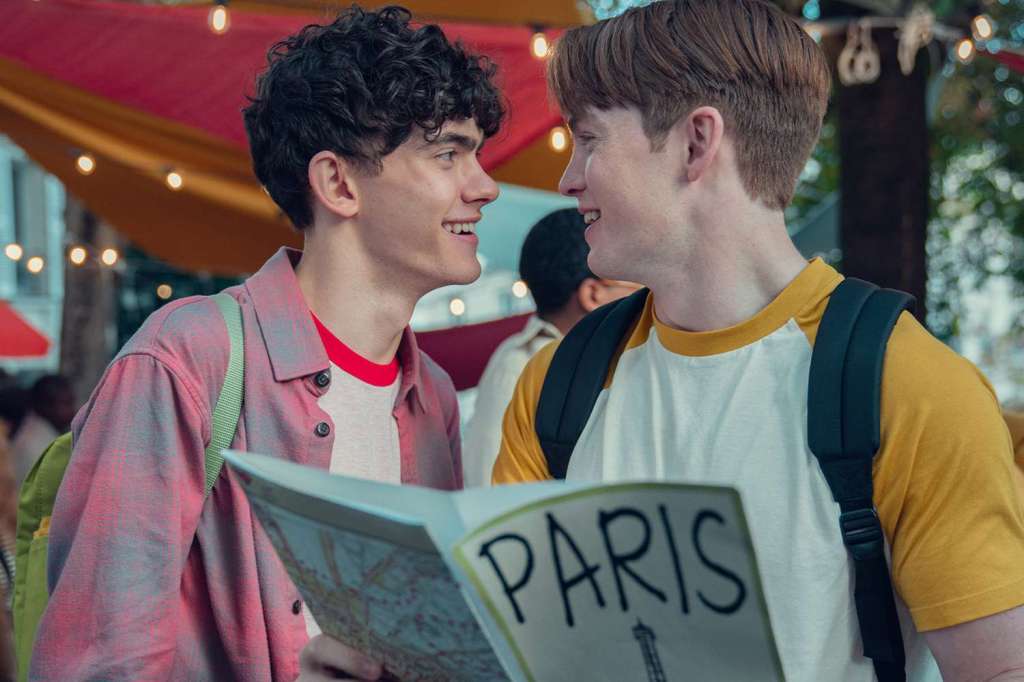
Having now read the first five (thanks to Libby and my loved Madison Public Library) and having watched the Netflix adaptation starring Kit Connor and Joe Locke as the beloved Nick and Charlie, I want to weigh in on the significance of this series.
I have a perspective on this topic that stems from being a gay teenager in a rural and conservative red county in the 1970s. I was raised in Hancock, in Waushara County. I know what redneck means. I was also interested in news and politics, so I watched and read about the burgeoning anti-gay zeal of Jerry Falwell’s Moral Majority (which was neither) and the use of gay rights as a political bludgeon by Republicans. If there is ever a need for a photo in Webster’s Dictionary for the word isolated, I have a teenage headshot that can be used.
So, I come to these books and television shows with a personal background, as does my husband, James, who grew up in the same constraints. He had at least steamed lobsters to aid in his angst, having grown up in a rural county in Maine.
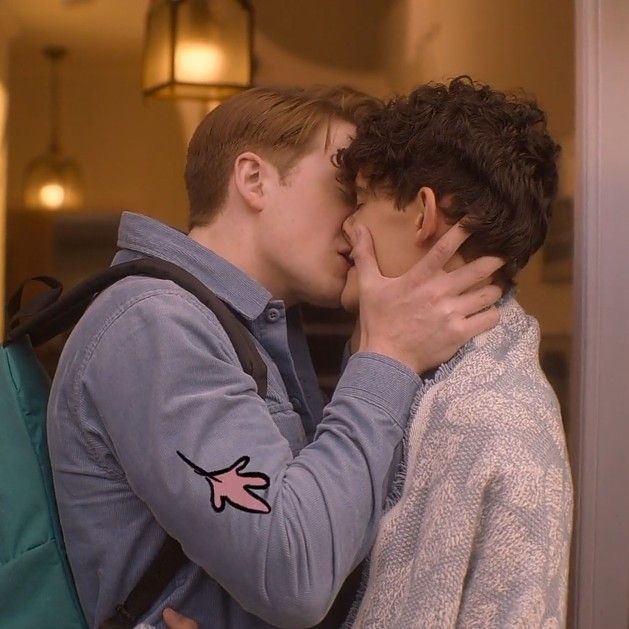
I have never seen such a well-constructed story that so compellingly captures the fragile, exhilarating process of being honest about who you are at a time when everything feels new and dizzying. The books portray the joy and vulnerability of teenage gay love from the nervous anticipation of a first kiss, the courage it takes to come out, and the sweetness of finding someone who sees you as the person no one before has ever recognized. Talk about dizzying.
The books are well-drawn and capture the moods from elation to angst. It is the Netflix series, however, that allows for the emotions of the story to be fully experienced. When Charlie’s mental health issues manifest themselves in an eating disorder, and Nick holds Charlie’s hand as they have a conversation with Charlie’s parents, tears were rolling down both James’ and my cheeks. Throughout the series, James and I commented on our experiences from decades ago in light of the social progress that has been made. More work remains.
The part of the series that most resonated with me was Charlie’s breakdown. I could empathize as I had my own breakdown of sorts. Though his was about food issues, mine centered around anti-gay bullying and the resulting consequences of four years of it in high school. The absolutely worst years of my life. The bullying, both verbal and physical, was unrelenting. I recall wearing long-sleeved shirts, often giving the reason that my arms were too thin and I did not like them. The truth was, I wanted to hide the bruises. My junior year was nearly intolerable. As the weeks to the junior prom neared, I was already in a sad and depressed state. But for months, I entered what I guess can be labeled a very dark period that almost defies description. There were so many problems, from no self-confidence issues to body image issues, to not having a single day of getting up and not dreading what was to come.
My parents never once asked about the prom. My intentions. My thoughts. Not a single sentence. I recall thinking it was not just a junior prom. It was also my junior prom. No one asked what was going on in my life. No one offered what I can now see as several ideas and thoughts about how to make the night possible. How to let me see past what I heard thrown at me daily for years. My brother, 11 years older, never once during my high school years pulled me aside to have a meaningful conversation about what I clearly was going through. During the years of abuse at school, my home life featured parents who fought. I was sad. I was angry. And I had a hard time seeing any light.
To add to the inner turmoil, during the period leading up to the prom, my parents introduced the idea of a weekend job opening on Main Street in Hancock. If I could do some weekend hours, surely more hours would come my way during the summer months. They were going to make sure I had a way to get to work and were figuring out all the details. Not a single word, however, was given on how one Saturday night featuring a Junior Prom might work out for the person in their home who was drowning. I deeply resented my parents and did not entertain the job idea. But I did put my fist through the wall in the dining room. (I had never before thrown a punch, nor since. That hurts.) That action stunned my parents. But not enough to ask what was going on in my life? Not enough to see that I was in the midst of trauma. After turning down the job idea, my siblings called me lazy. If they thought that term would sting, they missed by a mile. They simply knew nothing about my life as a teenager.
(In my four years of high school, I never attended a single school dance. Neither did James.)
Years later, when I finally found my ‘voice’ and worked in a small market radio station, I did interviews and wrote the five-part series (14 minutes 30 seconds) on suicide, which aired on our local newscasts. I would become a Big Brother in Madison. And over my adult years, I have strongly advocated for anti-bullying laws and for policies that assist gay youth, especially in rural areas.
The first time I knew there was a path forward as an adult and a solid break from the past came in Wausau during broadcasting school. I connected with a friend who was a clean-cut, all-around good guy. He noticed that when touching me, I would often flinch. He wanted to know why. So I told him of being hit and punched. My instinctive reaction had nothing to do with him. Partway through, he put his arms around me and pulled me close. We talked on the sofa for a long time. He was 21 years old and the first person to tell me I was OK just the way I was.
I applaud the work of Oseman because, for young readers, these moments with Nick and Charlie are both affirming and liberating, offering a mirror to experiences that might otherwise feel isolating. The series celebrates the beauty of gay teenage milestones, showing that two guys or two girls in love deserve the same tenderness and visibility as any other.
Yet the impact of Heartstopper extends far beyond its teenage audience. For many older adults, like James and me, who grew up in homophobic conservative communities and before the much-needed broader social progress, the chance to experience these milestones openly was simply denied. Bringing a same‑sex partner to prom, holding hands in public without fear, or simply confessing a same-sex crush without a beatdown were luxuries not available. That absence—years of living without the freedom to embrace authentic young love, being cheated and robbed of a whole section of the growing-up process —creates a bittersweet connection to Oseman’s work. Reading and watching Heartstopper have two distinct feelings for me. On the one hand, it is like witnessing the teenage years I never had. On the other hand, it is a glorious celebration of how far society has come.
This dual resonance is what makes the series profoundly important. For teenagers, it is a guide and a source of courage. For older readers or viewers, it is both a balm and a revelation, offering glimpses of the joy they missed and affirming the progress that allows new generations to live more openly. In bridging these experiences, Heartstopper becomes more than a story—it becomes a testament to the power of representation, the necessity of honesty, and the enduring hope that love, in all its forms, deserves to be cherished.
Two years ago, James and I were in a clothing store at West Town Mall. We had a 30% off offer. I was looking at a new sports jacket. Off to the side and in front of the mirrors stood a teenager with a jacket. He was turning this way and that to see how it looked. I took a few steps towards him and remarked that the color was fantastic. But I asked if there was a smaller size available? I did not say that the sleeves were too long, and it was just too large. He was back in a minute with the same jacket but in a size that fit him smartly. I asked what the occasion was, and he remarked that it was for his Junior Prom. (It was also clear that this teenager was gay. I told him that the jacket would make him stand out. I then continued with my shopping.)
When I found James, I told him about the young man. Shortly afterwards, we found the teenager in the store and gave him the 30% off card. He said, “Now, I can really afford this!” Later in the mall, as we were walking, the teen passed us and beamed with a “Thank you.”
That is the way a gay teenager should experience Junior Prom.

 Caffeinated Politics
Leave a comment