
Last week, Donald Trump’s decision to amplify a grotesque and racist depiction of Barack and Michelle Obama was only the latest crude and offensive action taken by someone we are told to regard as the leader of the free world. Historians and social commentators will undoubtedly study this era for decades, trying to understand how the United States reached a point where such a figure could gain a strong foothold with a segment of the electorate. I have long argued that character must be an essential trait for anyone who seeks to sit in the Oval Office. As someone who loves history and believes it should inform our future, I want to compare our current moment with that of four previous Republican presidents. Each example highlights an aspect of character and leadership that is sorely lacking. You will notice I have little more to say about Trump directly; the contrast becomes self-evident through these comparisons.
Gerald Ford: Decency
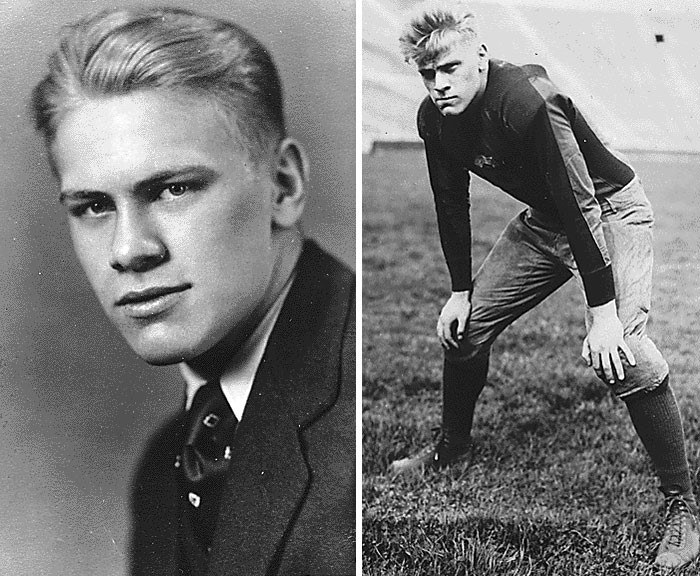
When it comes to possessing sterling character on the national stage, Gerald Ford belongs in the top tier. His decency was evident even in his youth, and the story from his teenage years resonates powerfully today.
Ford had a close relationship with his stepfather, even after learning at age thirteen that he was not his biological father. At seventeen, while working at a Grand Rapids restaurant, he unexpectedly encountered his biological father, Leslie King. Ford knew that King had beaten his mother. King arrived in a fine car, wearing expensive clothes, and suggested that Gerald come live with him out west on a ranch—an offer that carried the unspoken hope that Ford’s growing athletic fame might help rehabilitate King’s reputation. Gerald refused. No amount of money or luxury could shake his moral foundation.
I grew up during the Ford era; he entered the Oval Office when I was still in middle school. Decades later, one constant remains: Ford consistently exemplified candor, humor, graciousness, and—above all—decency. He is remembered for standing up to his abusive father and choosing instead to honor the man who raised him.
That story has stayed with me because it offers a clear definition of character. How one behaves when no cameras are rolling, no crowds are watching, and no historian will ever record the moment reveals a person’s true nature. Ford’s defining moment gives us insight into the man who would become the 38th President of the United States—and whose birthday I happen to share.
Abraham Lincoln: Curiosity and Empathy
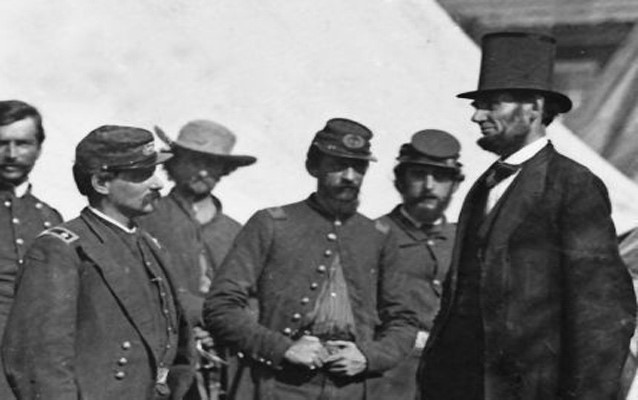
Even the most indifferent high school history student knows that the first year of the Civil War was marked by failure. The Union Army struggled to develop an effective strategy, and the Battle of Bull Run in 1861 was a painful setback for President Abraham Lincoln. Northern generals, at times, had problems with aggressiveness, prompting Lincoln to take a more active role in military decision-making. He frequently replaced generals and pushed for a more assertive strategy in 1862. How he gained the confidence to do so speaks volumes about his character.
Lincoln had only limited military experience from the Black Hawk War. To compensate, he devoured every military text he could find, studied them closely, and consulted experts. His curiosity filled the gaps in his education and strengthened his leadership.
Lincoln also possessed extraordinary empathy—so much that he nearly wore it on his sleeve. Entire volumes could be written solely about his ability to put himself in another’s place. Accounts of mothers pleading with him to spare their sons from war reveal how deeply their anguish affected him. His assistant, John Hay, wrote of Lincoln agonizing over letters concerning soldiers sentenced to die. Time and again, Lincoln acted with honesty, integrity, and kindness.
Dwight Eisenhower: Understanding History and International Relations
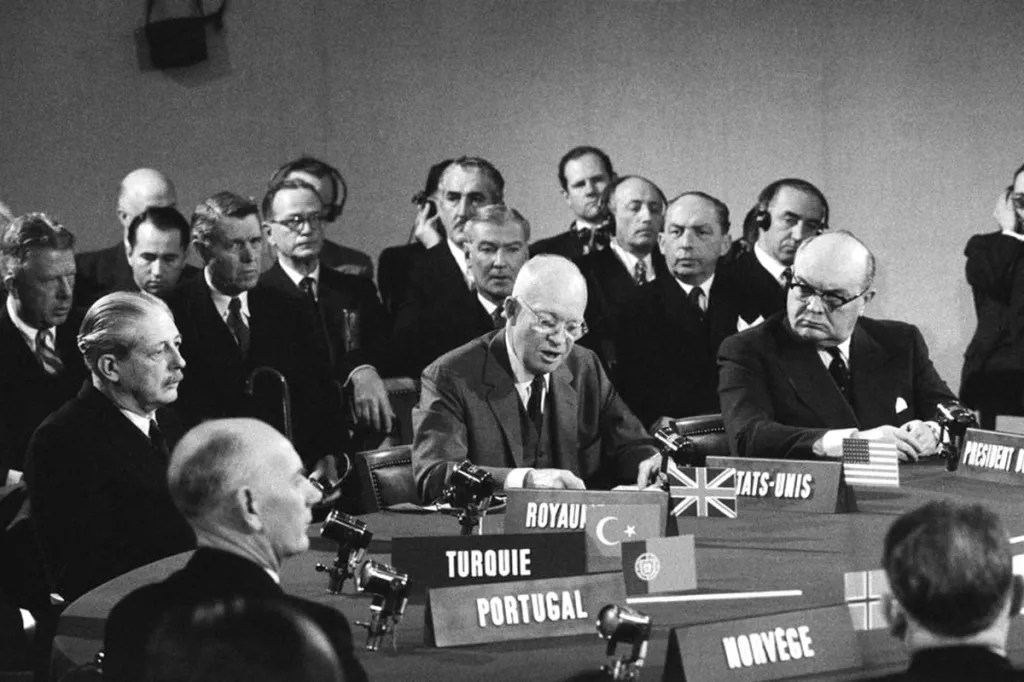
In the 1950s, Dwight Eisenhower worked to strengthen America’s alliances while encouraging nonaligned nations to move closer to democratic governance. Although he sometimes used sharp language when NATO actions diverged from his worldview, he made clear that the United States would not abandon its commitments.
In 1954, he stated, “The obligations which the United States has assumed under the [North Atlantic] Treaty will be honored.”
Successive administrations have experienced disagreements over NATO funding and responsibilities, but these disputes were handled diplomatically and with an understanding of the historical ties that bind the alliance. While debates over burden-sharing have always existed, every prior administration—Republican and Democratic—recognized that shared values, mutual interests, and collective security were more important than petty grievances.
Eisenhower understood the historical and diplomatic subtleties that hold alliances together. That is what adult leadership looks like. He and other presidents recognized that international relations unfold over years through incremental steps. Effective leadership requires maturity, reason, historical awareness, and a measured touch.
Richard Nixon: Read, Read, Read

Richard Nixon was a deeply cerebral man whose life was shaped by reading and learning. He would have made an excellent university president. In February 1972, as he prepared for his groundbreaking trip to Mainland China, he spoke to the press about the extensive study he had undertaken. He referenced André Malraux, noting that he had read widely—though not exhaustively—on China and its leaders.
In mentioning Andre Malraux, I do not want to reflect on many of the other experts-and there are many experts in this field of China–whose books have been brought to my attention. I do not want to indicate I have read them all but I have been exposed to a great number. I asked him to come because there was an interesting coincidence.
In 1969, when I met with President de Gaulle in Paris, Mr. Malraux at that time was the Minister of Culture in the de Gaulle Cabinet. We had a discussion prior to the dinner on the subject of China generally, and I was particularly impressed with his analysis of the leaders. His book, at least the one I have read—he’s written many–but his book, the one I particularly refer to was his “Anti-Memoirs.” I would commend it to you not only for what it tells about China and its leaders, but also about France, its problems, and the whole World War II and post-World War II era.
But here it is essential to do an enormous amount of homework just to come up to the starting line. I don’t want to say that after having read as much as I have, and as much as I will be reading between now and the time we arrive, that I will be an expert, but at least I will be familiar with the men that we will be meeting and the problems that may be discussed.
We now have ample evidence of what happens when someone sits in the Oval Office who does not have the desire to be a better person through the printed page, lacks Ford’s decency, Lincoln’s empathy, or Eisenhower’s grasp of international relations.
.


 Caffeinated Politics
Leave a comment