A society that claims to value freedom cannot selectively punish those who exercise it. A rather simple Civics 101 understanding. Yet that is precisely what the case of Rumeysa Ozturk illustrates—a young woman facing deportation because she wrote an op‑ed in a student newspaper.
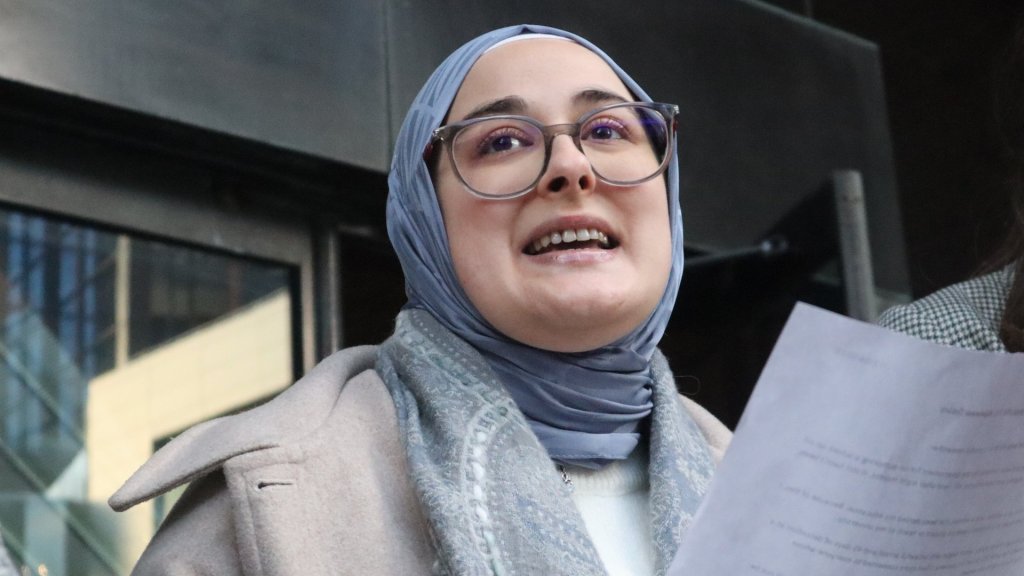
An immigration judge this week terminated removal proceedings against Tufts University doctoral student Özturk, who was detained for over a month last year as part of the Donald Trump administration’s effort to target and deport international students and activists involved in pro-Palestinian advocacy
Özturk’s arrest came after she co-authored a campus newspaper op-ed that was critical of Tufts University’s response to the war in Gaza. She was targeted by this White House in an attempt to chill pro-Palestinian speech in violation of her constitutional rights. This case has been on my radar for two reasons. First, the right to freedom of speech and the press’s ability to fulfill their mission as sources of news and information must not be compromised. Second, I have been a decades-long supporter of Palestinian rights and a vocal opponent of the horror inflicted upon Gaza by Israeli military policy.
Press freedom violations often come disguised as bureaucratic decisions, visa technicalities, or “routine” immigration enforcement. But as Seth Stern of the Freedom of the Press Foundation argued, this case stands out as “the most blatant press freedom violation of this century.” That is not hyperbole. It is an apt diagnosis that imperils free speech and preserves freedoms in our nation today.
“We’re thrilled that the effort to deport Rümeysa Öztürk is over, but remain alarmed and disgusted that it ever happened. Öztürk’s case is arguably the most blatant press freedom violation of this century, and maybe the last century as well. The administration did not even bother to present a pretext for its actions — it arrested her, jailed her in horrific conditions, and sought to expel her solely because she expressed views shared by millions of Americans about one of the most important issues of our time. That the government attempted to characterize mere opposition to Israel’s war as ‘terrorism’ is as chilling as any of the administration’s censorial antics. They went after noncitizens first, not because they have any greater appreciation of the First Amendment rights of citizens, but because they’re the low-hanging fruit. They’d throw out all of us who dissent if they could.”
Ozturk is not a celebrity journalist. She is not a foreign correspondent reporting from a war zone. She is a student. A woman who was engaging in the most basic form of civic participation. She wrote an opinion column. Not different from what I do four or five times a week on Caffeinated Politics. If what she did can trigger government retaliation, then the message to every aspiring writer, reporter, or commentator is unmistakable: stay quiet, don’t criticize, and remember that if it applies, your immigration status can be used against you. That is the kind of chilling effect that authoritarian governments deliberately cultivate. It should never be tolerated in a country that claims to champion free expression.
But that is precisely what Trump’s fascist and authoritarian government is attempting.
A free press is not a privilege reserved for those with the “right” pigmentation or the “right” perspective on a topic. The constitutional right to free speech is a bedrock principle that protects everyone—citizens, residents, students, visitors—because truth does not depend on nationality. When immigration enforcement becomes a tool to silence dissent, it transforms from administrative policy into political weaponry. And once a government discovers it can silence one critic this way, it rarely stops at one.
The danger here is not theoretical. If writing an op‑ed can jeopardize someone’s ability to remain in the country, then international students may self-censor, immigrant journalists may avoid sensitive topics, newsrooms may hesitate to publish controversial voices, and public debate becomes narrower and less honest. A democracy cannot function under those conditions. A press that is free only for some is not free at all. I understand that the angry white males in the Trump base are not grounded in American civics, which makes it more important that the rest of us assert these foundations at every opportunity.
My writing about Ozturk is due to what I view as a necessity. When her rights, press freedom, and free speech were attacked, the required response was obvious. It had to be loud, principled, and unwavering. That is what happened.
Here is my bottom line. If a student writer can be threatened with deportation for an op‑ed, then the next target could be a reporter, a professor, an activist, or anyone who dares to speak the truth.
Even a column writer on the Madison isthmus.
The true test of a society’s commitment to free expression is not how it treats the powerful, but how it treats the vulnerable.

 Caffeinated Politics
Leave a comment