
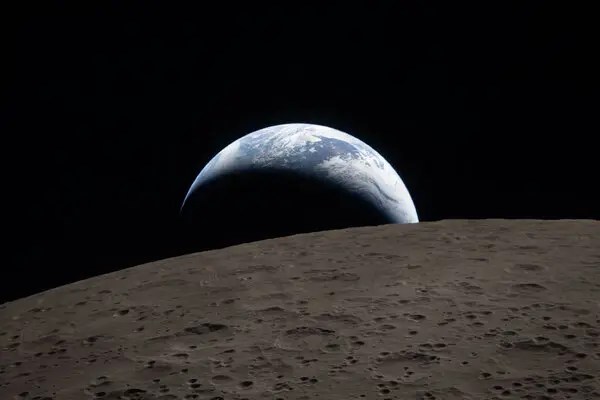
Did you feel like a little kid at some point on Monday as the images from Artemis II were sent back to Earth and the four astronauts on board traveled further and deeper into space than anyone has ever done? Watching the news about this event, my mind raced back to the man who made space adventure land with understanding for me when I was a boy. I knew that if Walter Cronkite were alive to see this, he would again say “Oh, boy”.
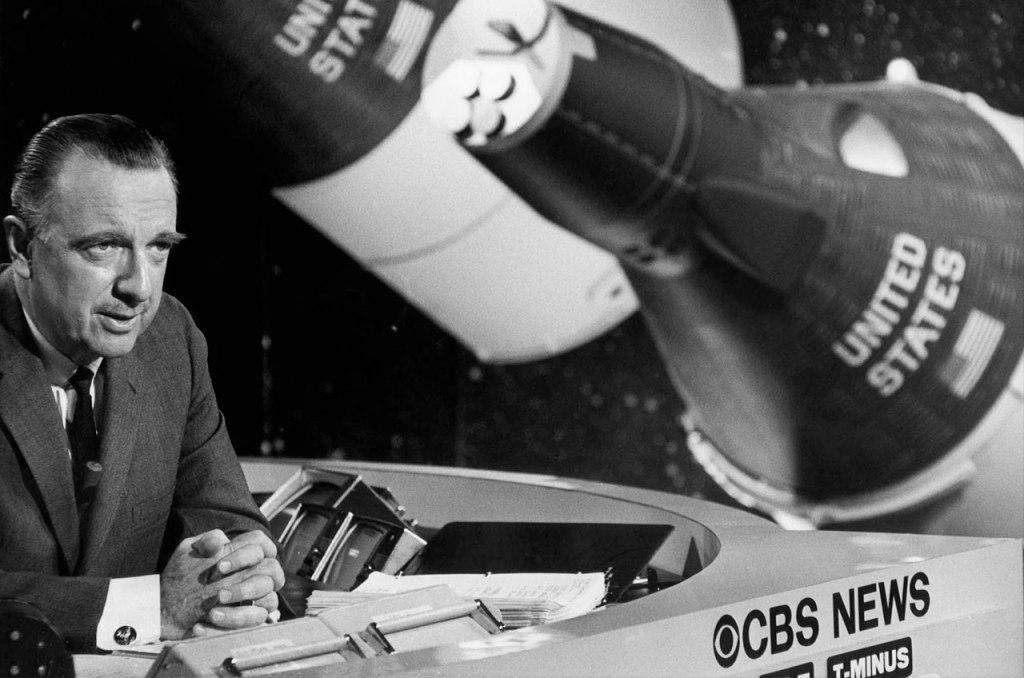
There were two iconic moments in Cronkite’s storied career as a reporter and anchor of the CBS Evening News. In 1963, with the weight of history along with deep sadness, he informed the nation that President John F. Kennedy was dead. The second moment we recall fondly. It was after mission control confirmed on July 20, 1969, “Houston, Tranquility Base here. The Eagle has landed”. It was then that Cronkite looked like every other person in the nation. With emotion, he removed his glasses, looked down, and softly said, “Oh, boy”.
Yes, it was perfectly fine to feel like a kid this week as we watched and read about the moon mission. And it felt stupendously wonderful. With the crass, vulgar, and dangerous news stories abounding this week, the space mission is a much-needed uplift.
I have always believed Cronkite was right about why we undertake such missions and pour resources into space travel. In retrospect, I think he grasped the necessity of space travel long before a large swath of the nation did. He knew space exploration was never just about rockets or telemetry. It was about the human urge to push past the horizon. I can see him in my mind, smiling with complete childlike wonder this week as the four astronauts engaged in what he termed in the Apollo years as “the ultimate adventure”.
As a boy, I sat for hours in my grandparents’ living room and lived the space story, perched on the brown sofa, yelling for Grandma to come back and “see this!” Cronkite was feeling the space mission with the same giddiness as a kid. That is why decades later, I think of him fondly as history is being made in the darkness of space. As an adult, I can write how his professional narration made those trips by astronauts feel like they were a family event. Eating grandma’s cookies with Walter talking as outer space came alive was about the best part of being a kid in my world.
I have again watched those broadcasts as Cronkite explained concepts of space travel, and turned lecture room topics into a managed discourse that folks in my hometown of Hancock could understand and be thrilled by. Then, after explaining, he did what we all did. He shared in the wonder of it all. This new mission, reaching deeper into space than any crewed flight before it, would have struck him as the natural continuation of the story he helped the country understand in the late 1960s and early 1970s.
I have to add something about Cronkite that I believe made him a powerful broadcaster, such as during space adventures that the nation watched. Sure, he was a finely polished and professional newsman. He was well-worded and able to write strong copy, demonstrated humility on the air, but above all, he projected a curious nature about events. He never pretended to be the smartest person in the room. Instead, he was learning along with the rest of us and positioned himself as the nation’s guide for the exploration of space.
The other thing that strikes me (I feel it is important to consider how we once saw images from the moon) is how Cronkite would marvel today as he compared the grainy black‑and‑white images of 1969 alongside the high‑definition vistas now streaming back from space. He would be floored by the photo that tops this column.
I know for many, Cronkite is not a name that echoes with space adventure. So for those new generations, I must say that in a certain way this week’s moon mission belongs to him as much as to the astronauts. He helped build the bridge between Earth and the stars, one broadcast at a time. And he would remind the youth of today, as he told me when I was a boy, that every space mission is a chapter in a story still being written.

 Caffeinated Politics
Leave a comment