
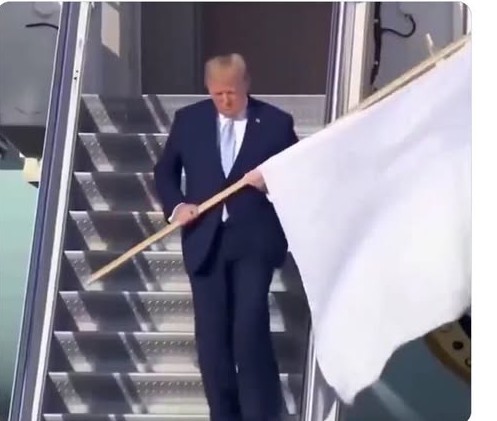
My first favorite author was Allen Drury, the Pulitzer Prize-winning author of Advise and Consent. As a teenager, I ate his books up, thrilled by their political and international stories with a continuous batch of colorful characters. But nothing…I mean nothing…that Drury could make up in his brilliant writing comes close to a plot line that Donald Trump has constructed with his needless military strikes on Iran. What occurred with his profoundly crude words over this weekend, and his bellicose and nonsensical actions, has placed the United States in a humongous hole. We are now the laughingstock of the world. And Iran has gained a position that it did not have six weeks ago.
Iran will require ships passing through the Strait of Hormuz to pay the cryptocurrency equivalent of $1 per barrel of oil on board during the two-week ceasefire with the U.S, a key figure told the Financial Times.
Hamid Hosseini, a spokesperson for Iran’s Oil, Gas and Petrochemical Products Exporters’ Union, which works with Iran’s government, told the Financial Times about the requirement on Wednesday.
He said that it will cost $1 per barrel of oil and that ships need to email Iranian authorities about what they are carrying.
“Once the email arrives and Iran completes its assessment, vessels are given a few seconds to pay in bitcoin, ensuring they can’t be traced or confiscated due to sanctions,” Hosseini told the newspaper.
Though talks are to start this weekend, with the discussions always beginning at the far ends, there is a tougher, angrier, and more conservative leadership in Iran than before the war was started. The bottom lines for Iran will include funding to rebuild Iranian buildings and infrastructure, and a new assessment of how the Strait of Hormuz will be viewed from an economic perspective.
I need not note that the Strait was open for use before Trump wanted to remove from the headlines the allegation in the Epstein files about his raping a 13-year-old girl.
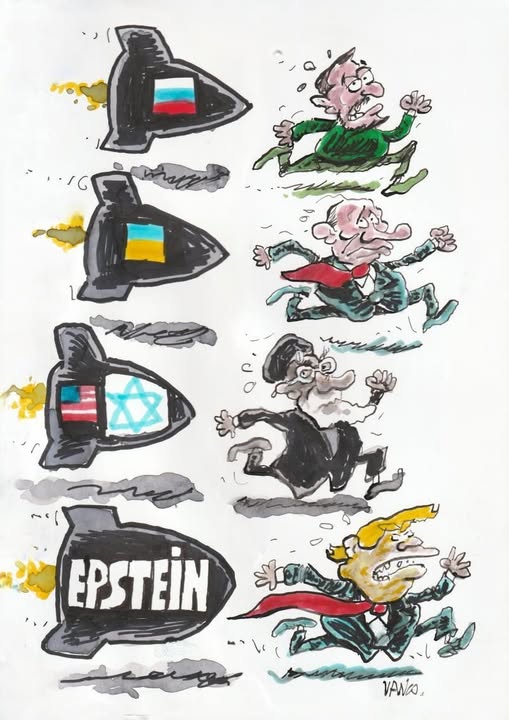
I simply am stunned, as my readers surely are too, that the Iranian regime was at its weakest point in its history on the eve of the madness that Trump started with bombing that country in late February, and now has newfound leverage. Let us not forget that much of the leverage Iran once had was mostly wiped out by adversaries over the preceding two years. As of this writing, six weeks later, Iran has emerged battered but with strategic gains not seen even during the era of the powerful Western-allied shah.
I land back on a theme that the Trump White House and the Defense Department, headed by a talking head from FOX News, have failed to grasp. They approached Iran as if it were a conventional adversary that could be pressured into submission through overwhelming military and economic force. (Here is why knowing history matters.) The non-book reader in the Oval Office failed to recognize Iran’s civilizational identity. Iran is not simply a modern state reacting to short‑term incentives. NO. It is the inheritor of a long, continuous, and wonderfully rich Persian history that shapes how its citizens interpret foreign threats.
At our kitchen table, I have said many times in different ways to those who gather there that Trump has treated Iran as if it were a fragile regime that could be pushed into compliance. But here is the deal. Iran’s political culture is built on the idea that survival depends on resisting exactly that kind of pressure that Trump thinks he can push forward. After all, Iran is not one of Trump’s wives.
Iranian endurance, pride, and resistance are what we witnessed in the last 24 hours. We will see more of this at the negotiations. It should not be a surprise to anyone. Over 2.500 years of its history is a lesson for us. Or at least the ones who read and wish to know.

 Caffeinated Politics
Leave a comment