
For the bulk of my adult years, I have been interested in which news story is the lead on each of the three main news networks’ nightly broadcasts. In recent years, an increasing number of leading stories have focused on weather events across the nation. When I want to hear about the turmoil at 10 Downing Street or the latest drone strikes on Moscow from intrepid Ukrainians, I have to first watch the latest floods, wildfires, and tornado damage from places ranging from California to the Deep South. It is not that network news has become melodramatic, but rather that the weather is full of news. The country is living through a period in which the atmosphere itself has become a disruptive force, and our citizenry and policymakers need to raise their awareness of what is happening.
I do not need to write that the storms are bigger and more intense, the floods are more frequent, and in some places where such events are uncommon, the heat lasts longer, and the smoke from wildfires poses greater health risks. All of that can be summed up with data galore. In Wisconsin, we are seeing the same increase in damaging storms.
In 2025, Wisconsin had a total of 39 tornadoes – ranking sixth most in the history of the state. So far this year, 2026, has already matched that total.
The National Weather Service has been documenting tornadoes since 1950.
On average, Wisconsin sees 23 tornados a year, but with a few more months of severe weather season, the state has already surpassed that.
“We’re well above normal, so 16 tornadoes above what we normally see in a year.” said National Weather Service Warning Coordination Meteorologist Tim Halbach.
So, the producers of news broadcasts aren’t chasing spectacle. They are reporting on our new reality. When the second heat dome of the summer sits over a large swath of the Midwest and East like a convection oven or when a massive hurricane crawls across the Gulf Coast dumping a year’s worth of rain in a weekend, that’s a national-level event requiring national news coverage. I may want to learn about the international news, but I understand what needs to be reported about climate change in America.
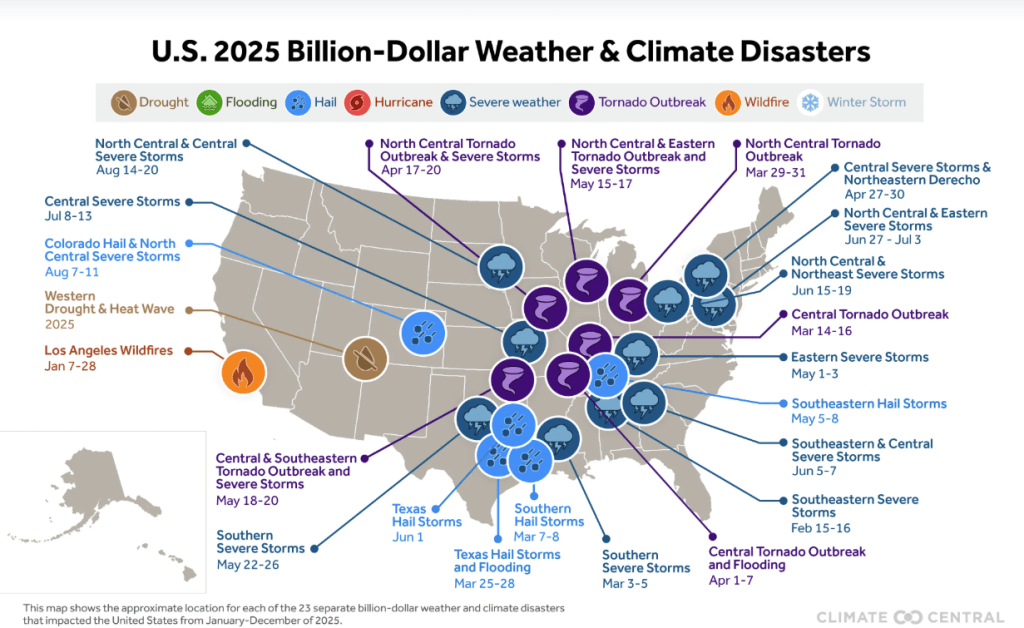
The weather data makes the editorial decision unavoidable at news desks across the world of network television. The United States has endured 431 billion‑dollar weather and climate disasters since 1980, costing more than $3.1 trillion. The pace is accelerating: 2017, 2021, 2022, and 2024 all rank among the most expensive disaster years ever recorded.
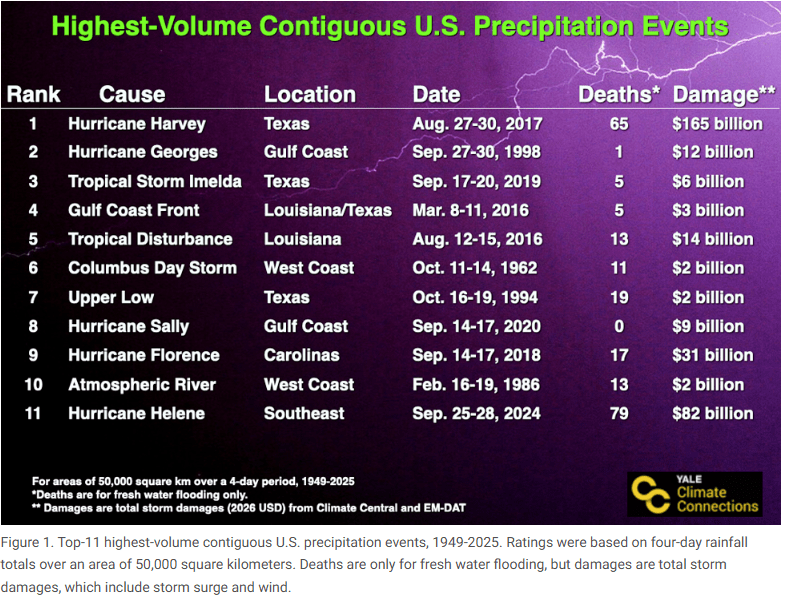
The EPA’s Climate Indicators Report shows increases in extreme heat, heavy precipitation, flooding, and wildfire activity across nearly every region. Seven of the top eleven highest‑volume rainfall events in the past seventy‑seven years have occurred in just the last decade, a statistic that explains why so many evening broadcasts now open with footage of submerged cars and washed‑out highways.
Climate change is the through‑line. Warmer air holds more moisture, so storms dump more water. Warmer oceans feed stronger hurricanes. Hotter temperatures intensify heat waves and expand drought zones. These aren’t abstract scientific principles; they’re the mechanics behind the footage that leads the news. We know from science that these weather phenomena have become more likely and more severe due to human‑driven global warming.
So yes, the nightly news is full of weather. And sadly, that is not going to change. The networks aren’t exaggerating. They are reporting and documenting. Remember when, 30 years ago, climate change was viewed by many as a distant threat. Turn on your evening newscast, and you will see it as our new normal. Homes lost, insurance rates skyrocketing, and community infrastructure being ripped apart.
No one, with any credibility, is now saying that climate change is a hoax.


Leave a Reply