
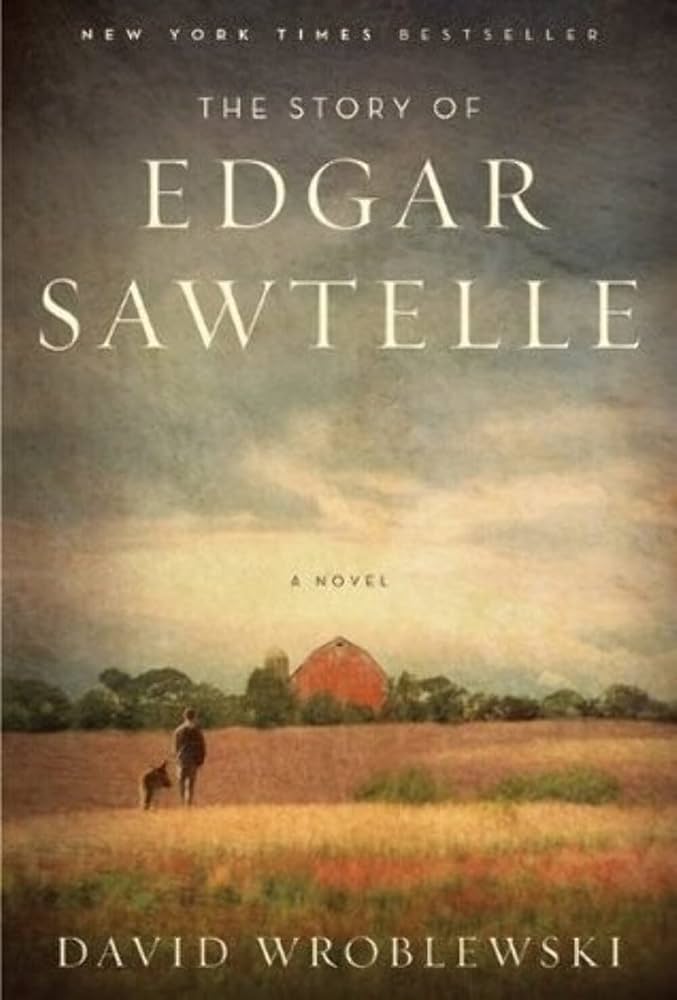
David Wroblewski writes The Story of Edgar Sawtelle in a deliberately unhurried style, which made it a perfect fit for this rainy, cloudy weekend. No timelines or must-do-lists. Unless making another pot of coffee is considered a chore. This type of weekend was exactly the kind of indulgent stretch of time that lets this novel properly unfurl. The book is one of those old-fashioned toned treasures that makes us aware of the joy in measured sentences, patient observations, along with a reverence for landscape and weather. (I should note the author lived in a rural part of Wisconsin, as did I. The story is rooted in the northwestern part of the state, near Chequamegon National Forest and Mellon and Canada.) Lingering rather than rushing through the pages is almost a requirement.
I am not sure how to impress on others the complete satisfaction this book gives a reader. I often express my great appreciation for a book or my absolute connection with it. So, what do I say when I mean it with even more exclamation points? This book was published in 2008, so I am not on the cutting edge of reading the latest release. I am also working uphill to promote a book many might have read, and if not, it is harder to sell it as an idea since it is not new. This book, so attached to the rhythms of the main characters’ daily lives, is set in a time and place that makes it a novel wrapped, as it were, in an old-world coat. And yet, not so far removed from the years of my childhood.
This was the author’s debut novel. So, you can imagine the wonder of how the book was viewed, as it reached number one on The New York Times bestseller list. Oh, yes, I should add, it remained there for 30 weeks. It has been translated into numerous languages and has resonated far beyond American borders.
Several reviews called the novel too long. But I need to add that readers, such as this column writer, have embraced that very expansiveness. I can assure you of the pleasure found in its meticulous detail. The density of description is a strength as the plot unfolds. I enjoyed the richness of Wroblewski’s prose, as it gives the book that old‑fashioned reading pleasure. The more I read, the more I felt a cadence in the writing.
The book’s plot is most compelling.
Born mute, speaking only in sign, Edgar Sawtelle leads an idyllic life on his family’s farm in remote northern Wisconsin, where for generations they have raised and trained an extraordinary breed of dog in this sweeping family saga. But when tragedy mysteriously strikes, Edgar is forced to flee into the vast neighboring wilderness, accompanied by three yearling dogs. He comes of age in the wild, struggling for survival, until the day Edgar is forced to choose between leaving forever and returning home to learn the truth behind what has happened.
Filled with breathtaking scenes—the elemental north woods, the sweep of seasons, an iconic American barn, a fateful vision rendered in the falling rain—the Oprah’s Book Club pick The Story of Edgar Sawtelle is a meditation on the limits of language and what lies beyond, a brilliantly inventive Hamlet retelling that becomes an epic tale of devotion, betrayal, and courage in the American heartland.
The Atlantic’s recent legitimate worry about the decline of reading, that slow erosion of deep, sustained attention in a world built for flicking, skimming, and scrolling, lands with real concern for anyone who still treasures the long, quiet companionship of a book. And that’s exactly where The Story of Edgar Sawtelle becomes a kind of antidote, a rebuttal wrapped in pages.
The Northern Wisconsin landscape painted with words is a place that feels both rugged and tender, shaped by seasons that matter and land that asks you to notice it. The blend of quiet labor, deep natural landscape, and inescapable human emotion comes alive north of Highway 29.

 Caffeinated Politics
Leave a comment