
Madison has spent months watching controversy swirl around Independent Police Monitor interim Chair Aeiramique Glass. What began as disputes over her conduct and what professionalism means has grown into a larger question: What happens when a public official seems to believe the rules that govern everyone else don’t quite apply to her?
In just the past few days, city officials have moved strongly to solve this embarrassing problem.
Madison City Council could vote on whether to terminate Madison interim Independent Police Monitor Aeiramique Glass’ appointment later this month after a council member introduced a resolution to release her Tuesday night.
The resolution, introduced by District 2 Ald. Will Ochowicz, would end Glass’ 9-month appointment extension before its March 31 expiration date, accusing her of failing to complete “essential duties of the position.”
“The extension was predicated on her continuing the job search for the permanent monitor,” Ochowicz said. “There has been zero progress on that.”
The resolution follows an Oct. 2 memo from Deputy City Attorney Patricia Lauten expressing concern that Glass had not begun recruiting a permanent monitor. The memo lists serving as “hiring manager for the next Independent Police Monitor” among Glass’ top responsibilities.
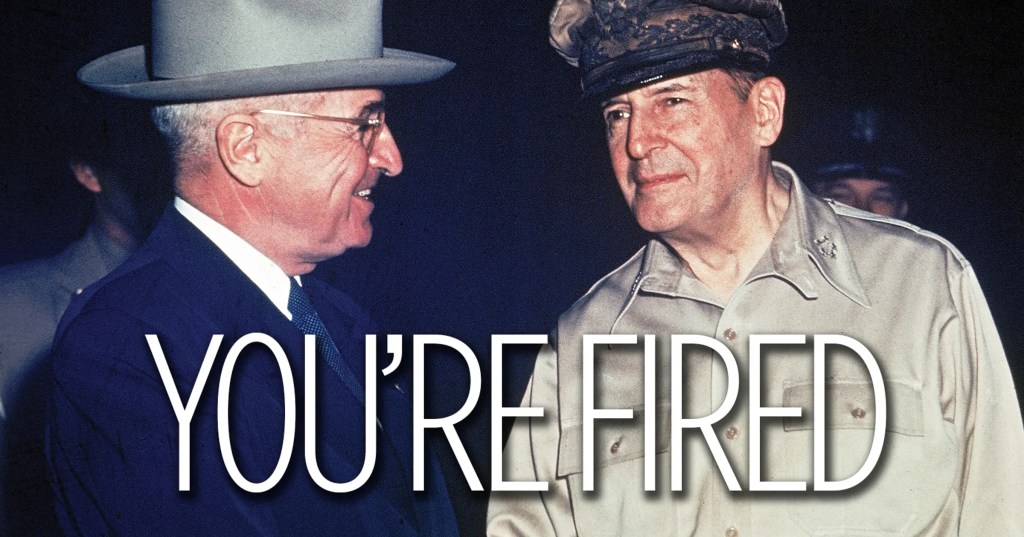
As I have watched the spectacle play out, it seems impossible (at least in my mind) not to think of one of the most famous examples in American history: when someone thought he was larger than the person who actually signed his paycheck. I am thinking about when President Harry Truman faced off against General Douglas MacArthur.
MacArthur was no ordinary public servant. He was a military icon. He commanded troops in World War II, led forces in Korea, and enjoyed immense public popularity. Many Americans considered him larger than life.
Yet Truman fired him. Correctly so, too.
The president removed him because MacArthur repeatedly acted as if his own judgment superseded the authority of the government he served. The general believed he could chart his own course. Truman believed no one, regardless of stature, was entitled to operate outside the chain of command.
The principle was simple. No person is bigger than the institution. It is a lesson I strongly suspect Glass is about to learn.
Glass has willfully and seemingly gleefully worked to disrespect procedures, city officials, and authority structures she deems unworthy of her time and personal use. She seems unaware that when a board chair or organization head becomes the story instead of the board’s work, something has gone wrong. She has worked to make herself the story, and that is a serious mistake.
Many people feel the oversight board was a needless and serious waste of money that could have funded other city services and ideas. Others feel it was a needed board so complaints and concerns could receive independent consideration. All can now agree that Glass and her behavior have overshadowed the board’s supposed mission. For months, we have talked about her lack of professionalism and decorum, and whether the chair of a public body respects the position’s responsibilities and limitations.
That is why the Truman comparison resonates.
The lesson of Truman and MacArthur was one about who is the driver and who is the passenger. This is one of those institutional lessons we all get to watch play out as Madisonian leaders must now demonstrate whether standards and procedures matter more than puffed-up personalities.
Truman understood that letting MacArthur continue would have set a dangerous precedent. The message would have been that enough prestige, influence, or inflated self-confidence could put someone above accountability.
Madison must reject that same idea.
Whether one agrees with Glass politically is beside the point. Whether she has supporters is irrelevant. The real question is whether her conduct has damaged public confidence in the board and whether she has failed to demonstrate the professionalism expected from someone entrusted with such responsibility.
Harry Truman understood that leadership sometimes requires removing someone who believes they have become indispensable. The truth, then as now, is that nobody is indispensable.
Including Aeiramique Glass.


Leave a comment