
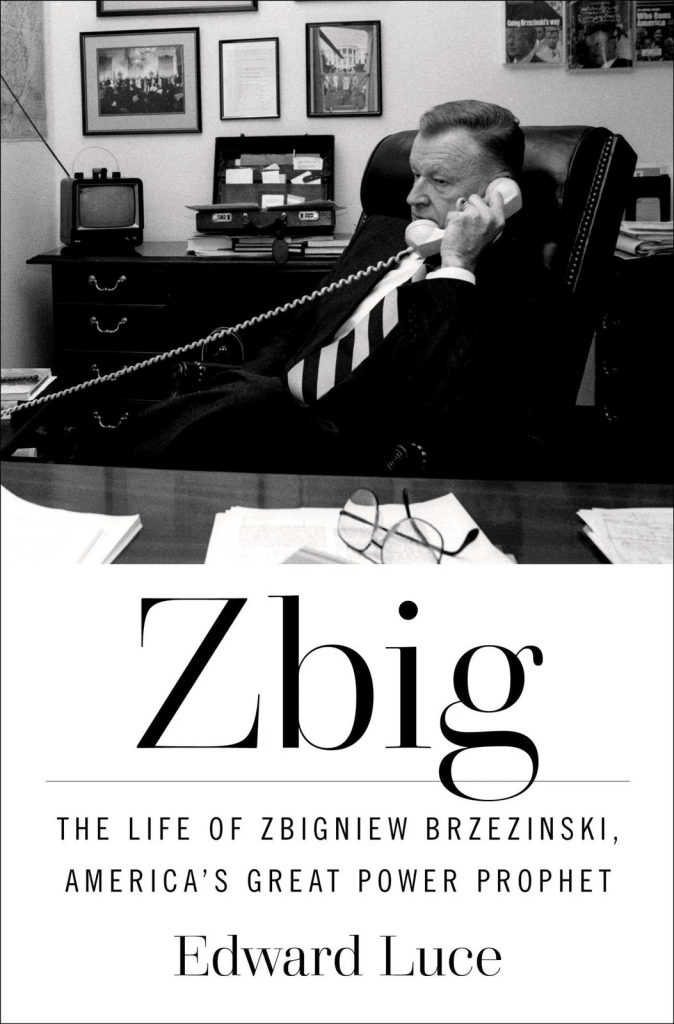
My current active reading pile includes Zbig by Ed Luce, a grand narrative and meticulously researched biography of Zbigniew Brzezinski, President Carter’s National Security Advisor. On this chilly, gray day, I read the chapter titled “The Sands of Ogaden”. It takes its name from the conflict in the Horn of Africa, where Ethiopia and Somalia became caught up in a larger struggle involving the United States and the Soviet Union. But this chapter’s importance extends beyond the battlefield. It belongs to a period when Carter’s administration was discovering how difficult it was to reconcile American ideals such as human rights with strategic interests and the realities of an increasingly unstable world. America’s influence in the Middle East was being tested, and Iran was moving toward a revolution that would fundamentally reshape the region’s political and religious landscape.
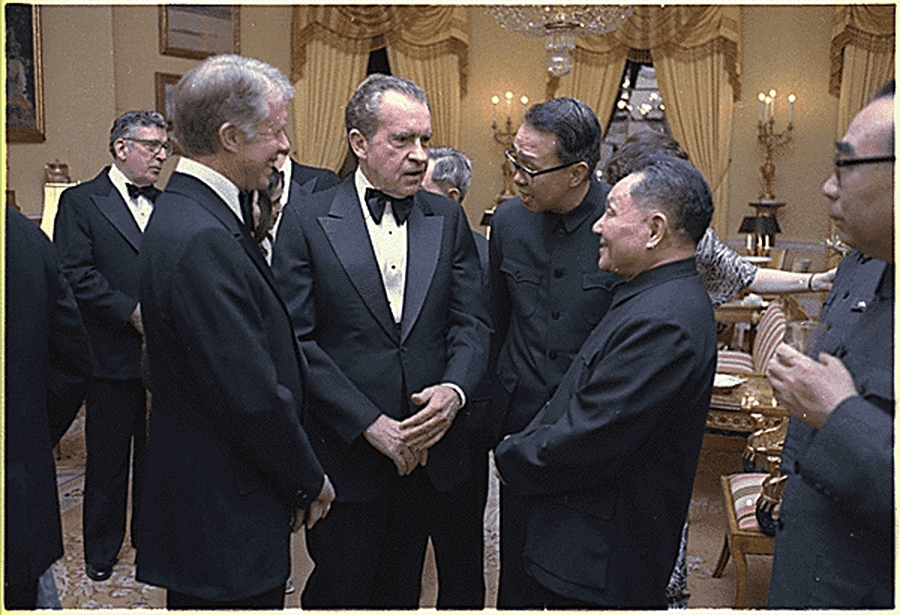
As Luce describes, and as those of us who lived through the period recall, Brzezinski was an intensely strategic thinker. He was particularly concerned that Soviet advances and Soviet might could undermine America’s position, and, in light of that, worked mightily to ensure normalization with China. Balance of power was not only Henry Kissinger’s motivation. The China policy was masterful and vital. The chapter tells the story of Richard Nixon returning to the White House in 1978 for a State Dinner for Deng Xiaoping, the leader of the People’s Republic of China. Vice President Walter Mondale strongly objected to the invitation, but Carter, in my estimation, deserves praise for his gentlemanly conduct.
But developments in Iran pace the chapter, and the insights Luce writes about draw readers in.
For years, Iran under Shah Mohammad Reza Pahlavi had been one of America’s most important strategic partners. It was central to American calculations about regional security. But what all of our intelligence agencies, ranging from the CIA, the Defense Department, the NSC, and others, missed was the serious discontent accumulating. Political opposition was constrained, dissent was suppressed, and the Shah’s security apparatus, particularly SAVAK, became a symbol of the regime’s reckless use of power against its own people. The key to understanding the situation on the ground can be summed up as the mullahs and the faithful in the mosques came to be viewed as an alternate form of authority.
Then Ayatollah Ruhollah Khomeini returned to Iran. Some State Department assessments, before his return, likened him to Gandhi and predicted he would not be a political force. I recall that in 1979, as developments were unfolding and I was taking a current-events history course, Mrs. Marge Glad (the most important teacher in my life) wondered how people in power in Washington had not listened to the Ayatollah’s speeches over the years. He was not like Gandhi, other than breathing air. (I suggest that readers of this book who lived through the hostage crisis will have views and perspectives that will only enrich the reading experience.)
Luce writes with clarity that Iran presented a different kind of challenge for the Carter White House. It was a domestic political and social upheaval in the Middle East that American intelligence and policymakers struggled to understand. Secretary of State Vance took a more cautious diplomatic approach, while Brzezinski was more inclined to support the Shah’s authority. Carter, though he had read extensively on the issues involved, seemed uncertain about how to proceed in the months leading up to the Shah’s fall.
The following chapters in Luce’s book, which will dive deeper into the Iranian revolution, “Twilight of the Doves” and “The Ayatollah and the Pope,” will doubtlessly prove as interesting as what I have already read. My timing in reading this relatively new book is that my vantage point of October 2026 gives the story an extraordinary contemporary relevance.
Luce’s biography offers an opportunity to revisit the people, assumptions, and decisions behind Iran’s transformation and its relationship with the United States. I highly, highly recommend this book. Its central lesson, if I could sum it up concisely, is how quickly international order can change and how long the consequences of misreading history can endure. LORD! IS THAT TRUE!!


Leave a Reply