
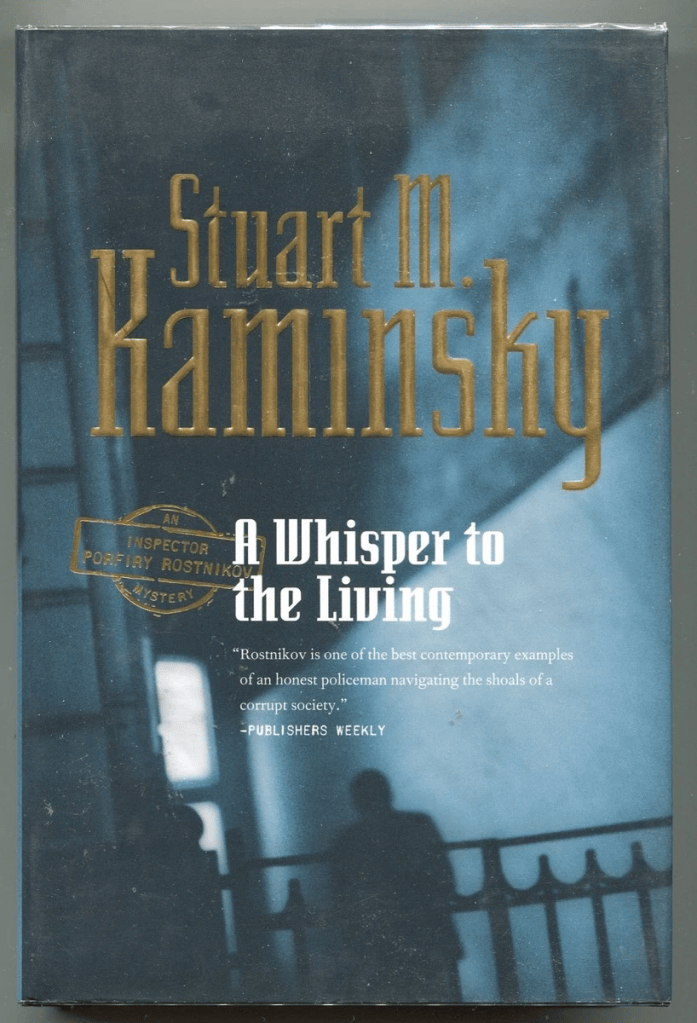
Another book will be added to a special shelf that overlooks where I write these columns. Memorable and notable books from Allen Drury, Rick Bragg, Teddy White, and Margaret Mitchell can be found there. Each book has moved me or impacted me in one way or another. Each book has a nostalgic pull. Now, the last book in Stuart Kaminsky’s Inspector Porfiry Rostnikov series will find a home.
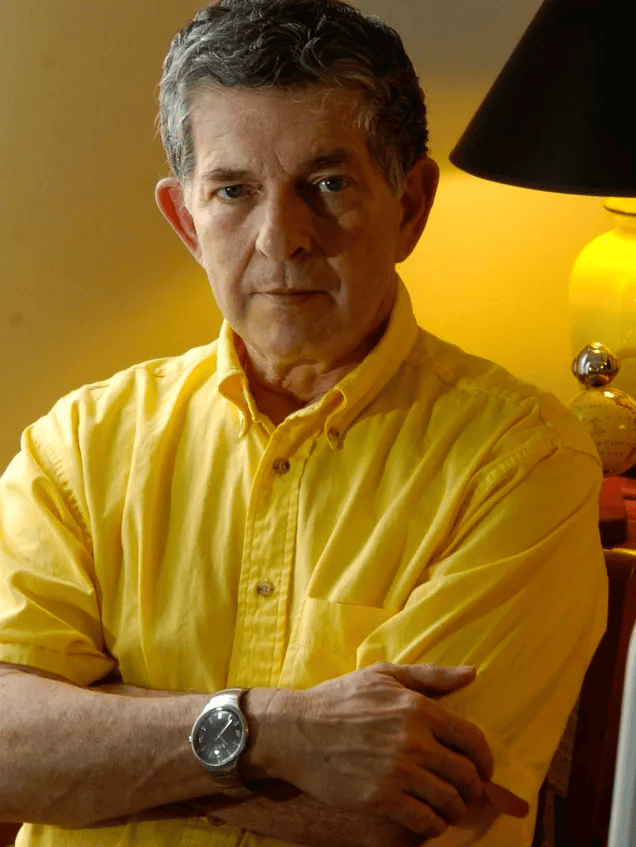
Kaminsky, the prolific and gifted author, gave us many memorable stories, but one of his most remarkable accomplishments was his Inspector Porfiry Rostnikov series. Set in the Soviet Union and later in Russia, the novels offered much more than traditional police mysteries. They provided a window into a changing society, filled with political uncertainty, human contradictions, humor, tragedy, and the everyday struggles of people trying to find their way through complicated times. What, to me, was masterful in each book was how Moscow itself was presented as a character, always shifting with the season and the political period.
At the center of it all was Inspector Rostnikov, a wonderfully drawn character. Intelligent, thoughtful, occasionally wry, and deeply human, Rostnikov was not simply a detective solving crimes. He was a man navigating a world that was constantly changing around him, and with one leg so damaged from WWII that, in time, it would be amputated. And as the books progressed, so did he. His colleagues, friends, and the people who crossed his path became a part of the reader’s world.
Who could not warm to Sasha, a handsome young man, personable and struggling with his personal relationships; be intrigued by Karpo, a brilliant investigator who is tall, gaunt, intimidating, and a deeply committed Communist; or smile at Zelach, a simple, unassuming policeman with moments of deep insight?
What made Kaminsky’s passing particularly poignant was the timing. When Kaminsky died on October 9, 2009, his final Rostnikov novel, A Whisper to the Living, was just being published. The hardcover edition is the one that will be placed on my shelf. It was the sixteenth book in the series, but the characters’ lives seemed to have so much more ahead of them. Their evolution was still unfolding in my imagination. I had come to know them so well that it was hard to accept there would be no new adventures, no further conversations, and no chance to see where the author might take them next.
My own introduction to Kaminsky came during the COVID pandemic. Like many people who understood the gravity of the pandemic and followed healthcare advice, I sought meaningful ways to fill the long, uncertain year. Through crowdsourcing and fellow readers’ recommendations, I discovered his Rostnikov books. What began as a recommendation became a wonderful literary journey.
Over the years, I read my way through the series, along with books by many other authors and series. Some writers entertained me for a few evenings; others kept me company for years. Kaminsky belonged firmly in the latter category. There was something especially satisfying about returning to Rostnikov and his world, picking up the threads of familiar lives and watching the characters continue to develop.
Perhaps the greatest way to pay tribute to an author is to know that the characters who were created for the pages outlived the author.
Thanks, Stuart.


Leave a Reply