The main news over the Thanksgiving Holiday weekend was shameful. The collective retaliation by the Trump Administration against people from nations around the world who are now part of our national family, as he desires to halt all asylum decisions and remove millions who call this place home. It was chilling to learn that Defense Secretary Pete Hegseth likely committed a war crime when he ordered a follow-on attack to kill survivors of a boat strike in September off the coast of Venezuela. The need to escape into the pages of a book as the foot of snow fell at our isthmus home seems easy enough to understand.
In my desk drawer is a list of books that are either classics that I should have read as a youngster (Treasure Island by Robert Louis Stevenson) or books that showcase a slice of the nation and its themes that any serious student of history should read (The Prairie by James Fenimore Cooper) or literary classics like the one that landed near my coffee mug over the past few days. On top of the books that I do read, there is an awareness of all the ones I should have already read. Somehow, as a boy and then a teenager, I missed many of the classics as Ian Fleming and Allen Drury were calling me. Our small-town librarian, Winifred Carlton, tried to steer me towards them on Friday evenings, but the space mission in a Drury page-turner and Goldfinger demanded my attention.
So, it was this weekend that a book that received critical acclaim, and was published in 1965 in The New Yorker , three years after I was born, and has been on my list of must-reads, was cracked open. Within 20 pages, I asked myself, “Why the wait?”
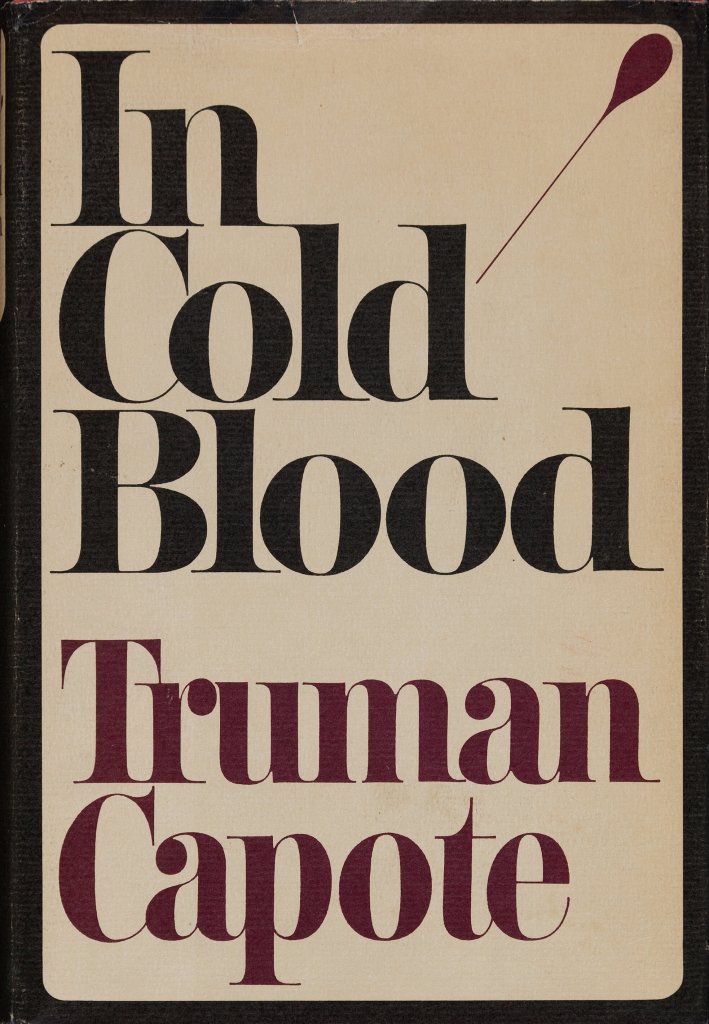
When In Cold Blood was officially published in book form in 1966, it startled readers with a new form of journalism and narrative writing. Truman Capote had meticulously (with a capital M) researched the 1959 Clutter family murders in Holcomb, Kansas, and then wrote the account with the pacing, atmosphere, detail, compelling storyline, and psychological depth of a novel. Like a cake that is best when all sorts of spices are blended, Capote fused reporting and facts with a kick-ass narrative approach. I well understand that many of the readers of this post are already aware of what the author accomplished and what we take for granted with the form termed a “nonfiction novel”. But this is the book that gave birth to such writing, and after 60 years, I am thrilled to read and discover why the public went wild over the book in the 1960s.
Within the first 20 pages, Capote has already reconstructed conversations, settings, and inner states of personal thinking with novelistic precision. I can only imagine, as the reader seems to sit alongside Perry Edward Smith as he sips a soda, what scores of others in society were thinking as Capote gives equal narrative weight to the victims and the killers. Humanizing both sides is brilliant.
While reading the opening pages, I thought of how Robert Caro used large segments of his first book about Lyndon Baines Johnson to show how the Texas Hill Country formed and shaped the character of the man who would change American politics. Capote does the same with his atmospheric style when with words painting the Kansas plains into our minds. With a few paragraphs, the quiet town of Holcomb has taken shape, and because we know what is about to happen as Capote walks with each family member that last day, it seems that an additional character is also present in the telling. Dread itself is stalking the pages.
I have read about this book and the then-new approach to storytelling. I know it was revolutionary. It blurred the line between total facts and outright fiction. While reading this weekend, I thought about the 1991 film JFK, directed by Oliver Stone, as much conversation was created about whether truth could be conveyed more powerfully through art than through bare reporting. Capote died in 1984, but it would be interesting to see how he would have added to the national conversation about this topic.
So, nearly sixty years later, I am fascinated by In Cold Blood. After the Netflix series about Ed Gein (which I have zero interest in watching), about a madman who lived not so far from Hancock where I grew up, it is clear there is much desire for true crime stories. But that is not why Capote’s book has long been on my list. I had read and heard that Capote’s work was a civic reminder that justice, empathy, and the fragility of our larger community should be better understood. No one could confuse the lurid nature of Netflix’s offering with that found in the pages of the book in this post.
I am sure there were book clubs in the 1960s, and would it not be interesting to be a fly on the wall to listen to that generation talk about how Capote used a dastardly crime as a vehicle to prove that behind every headline lies human complexity.
As Sunday morning dawned, we were aware of another mass shooting. This time in California, with four dead. We are saturated in crime stories. They are in the news every day. But this afternoon I am reminded as I sat to read that Capote’s work demands that we slow down and see the human cost of violence. That does not come through with the never-ending news stories of gun violence. The famed author asks us readers to consider the killers not as monsters but as broken men shaped by circumstance, and the victims not as mere cold statistics but as lives cut short.
How to sum up what I am trying to say. In Cold Blood is a way to narrate tragedy and then understand justice, community, and perhaps ourselves.

 Caffeinated Politics
Leave a comment