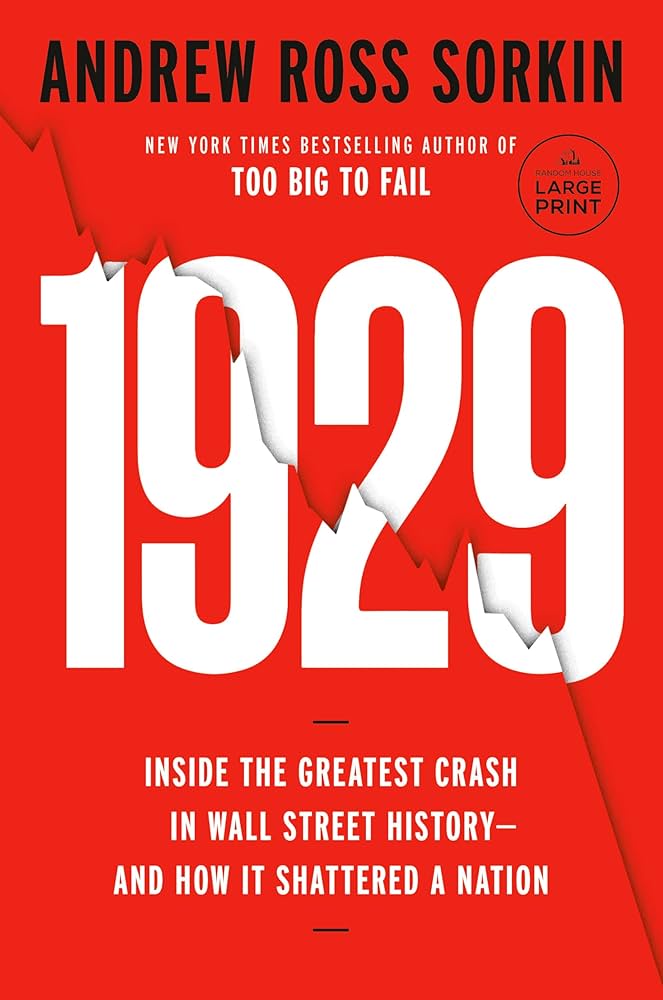
As the New Year unfolds, I am reminded of how I wish to spend a chunk of my time in the next 360 days. Reading great books. Recently, I wrote rarely do I read a newly published book. My shelves and current book pile are filled with slices of history published many years and decades past, and it seems there is never enough time to read new releases. But the excitement created over 1929, the 2025 Andrew Sorkin book was so frequent and euphoric that I added it to my list on Libby. For the past ten days, I have been doing what many of my fellow Americans have done over the past year. Transported back to the high times of penthouse luxury and then the shocking valleys of financial ruin.
What makes 1929 so compelling is how Sorkin, after years of meticulous research and then the art of magnificent and outstanding narrative writing, explains the most devastating economic calamity to befall our nation. What he does with great chronological dexterity is place the architects of short selling and gaming the stock market alongside the economic impact created by those financiers. It does not take too many pages to fully understand that the market crash or the Great Depression was not an act of nature. Sorkin allows those of us not steeped in economics and banking to understand that economic collapses are engineered, accelerated, or at the very least permitted by human beings in positions of authority. As a lover of history, I deeply applaud the author’s historical fluency, and it is that depth that readers (I strongly suspect) have found indispensable. I loved how he weaved the era’s power brokers in finance and politics —John J. Raskob, Senator Carter Glass, Charles E. Mitchell, etc—as the architects of a national drama that shaped the lives of ordinary Americans.
This is where the author’s credibility matters. His background in archival research and his instinct for the civic dimensions of history allow him to portray these figures with the multidimensional fullness that readers can use to place them into the larger unfolding story. We turn the pages as their decisions—made in boardrooms, Senate chambers, and newspaper interviews—ripple outward into the kitchens, bedrooms, and friendships of the novel’s central characters.
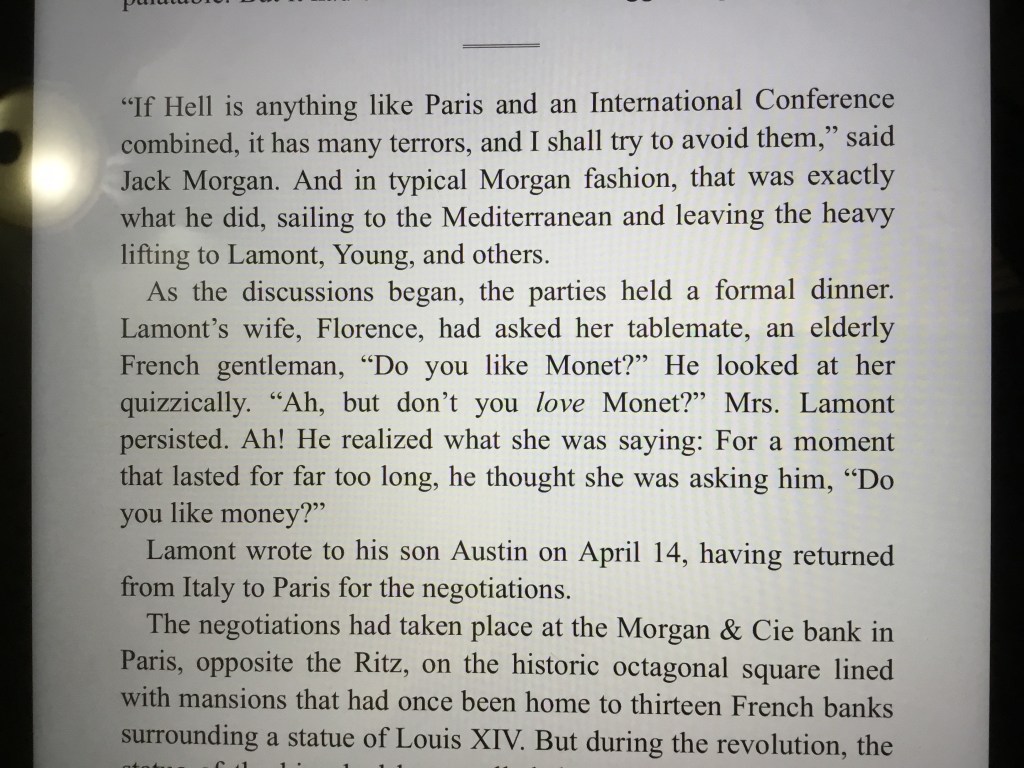
There are hundreds of nuggets to be discovered in this book, and I post one below that speaks much about the larger story.
The way this book is constructed is as wondorous as the richly told story. I wish to give a couple of thoughts about a few of the characters that made the book a Five-Star winner for me.
John Raskob, with his famous statement that every American should own stock, becomes a kind of ghostly presence in the book. His optimism is earnest, but also reckless. People repeat Raskob’s arguments almost verbatim at dinner parties, thinking they are quoting wisdom rather than wishful thinking. The author uses Raskob not as a caricature but as a symbol of the era’s civic naïveté. Millions were soon to learn that prosperity was not a birthright due to just being an American, but a fragile arrangement requiring stewardship both in homes around the nation and from the powers in the Federal Reserve and the White House.
Senator Carter Glass, by contrast, appears as the stern counterpoint as he warned, repeatedly and publicly, that the financial system was a house built on tinder. His speeches, woven subtly into the narrative, become the voice of the conscience that the nation ignored. For me, he is the moral barometer, but only on finance. His morals are not to be found in race relations. When it came to the stock markets and excesses of the rich, the lesson to be found in Sorkin’s work is that civic responsibility sometimes means listening to the people who tell you what you don’t want to hear.
And then there is Charles Mitchell, the charismatic titan of National City Bank, whose confidence was so absolute it bordered on theological. I think he could have sold ice to the residents in the far Northern climes. His public assurances that the market was sound echo through the book like a drumbeat. The author uses Mitchell to show how authority, when misapplied, becomes a civic hazard as his voice of confidence drowned out a chorus of caution.
The broader lesson that comes shouting out at us from the pages is how Sorkin makes clear that the health of a democracy depends on the integrity of its leaders and the discernment of its citizens. When either falters, everyone pays a price. The other obvious point of the book is that history is not a sequence of random events but a chain of decisions, some that are calculated and some that are made without any reason or moral weight.
In our moment in history, when public trust is super brittle and civic life is strained to the point of snapping, 1929 offers a sobering reminder that we should heed. Great, big, and powerful societies do not collapse all at once. They erode through misplaced confidence, ignored warnings, and the seductive belief that prosperity is permanent.


Leave a comment