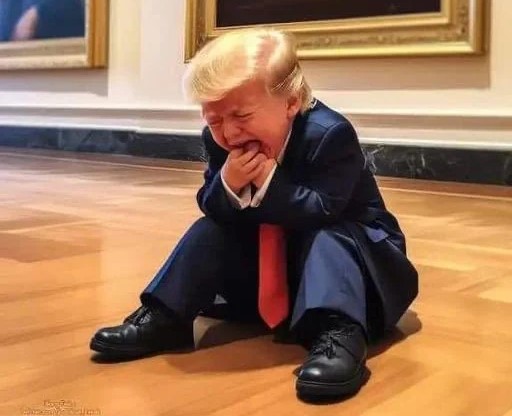
I was wrong.
I had predicted that the Supreme Court, while ruling that a president does not have the authority to hijack tariff-making policy through the executive branch, would hand down a 5-4 decision. I had Justice Gorsuch with the conservative minority on the bench. As we know, he joined with the majority, a decision written by Chief Justice Roberts, resulting in a 6-3 ruling.
Let me say at the outset, I vehemently opposed the tariff threat made during the 2024 presidential campaign. It was an absurd policy idea as it ran counter to economic reasoning and basic understandings of how international competitors vie for customers on the world stage. While Alexander Hamilton understood the rationale for tariffs when our nation was trying to encourage infant industries in the new, burgeoning nation of 1789, it is also true that the Republican Party historically leaned (and correctly so) toward free trade. A place I have long stood, too, since the presidency of George H. W. Bush. Dick Gephardt was wrong on the issue, and Bill Clinton was correct. I like free trade.
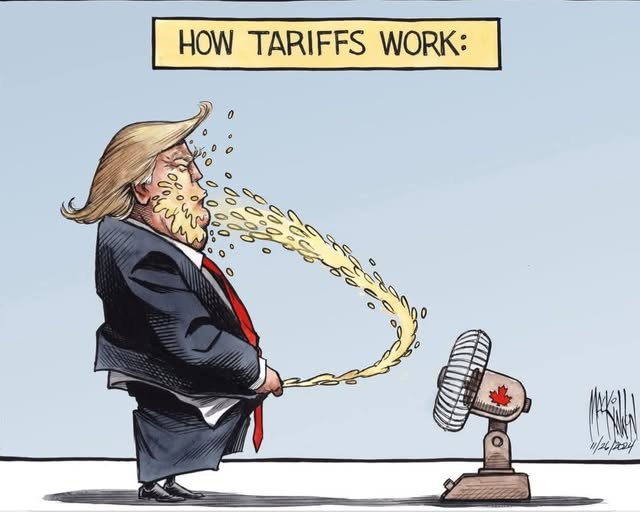
But this post and the larger argument over the past year go deeper than the economic theory of tariffs. There was a profoundly important question about the asinine attempt by Trump to fashion a declaration of an emergency and then act with what he deemed as his presidential prerogatives.
In a constitutional republic, power is not a buffet from which presidents may casually scoop whatever authority suits their momentary impulses. (Like when a person in another country says something a president doesn’t like.) Trump has a problem with grasping that the Constitution is not a suggestion but rather a binding document. Today’s powerful court ruling against presidential attempts to unilaterally manipulate tariffs is not merely a legal footnote; it is a thunderous reminder that the United States is governed by laws, not by the whims of a single officeholder.
Trump thought he could use tariffs like a toggle switch to either please or punish. The Constitution is unambiguous: Congress, and Congress alone, holds the power “to lay and collect Taxes, Duties, Imposts and Excises.” That is not decorative language. It is a structural safeguard, a deliberate assignment of authority to the branch closest to the people and most accountable for the economic burdens it imposes. When a president attempts to seize that power, it is more than overreach. It vandalizes the architecture of American governance.
Trump would understand that if he were a book reader, had been a serious student, or someone with a curious mind. Three strikes!
The judicial rebuke of Trump’s tariff maneuvering underscores this point with crystalline clarity. The court did not indulge the fantasy that the executive branch may inflate its authority simply by invoking urgency or national interest. Instead, it reaffirmed what should never have been in dispute: the president cannot conjure legislative power out of thin air. (A point I have written about, in one form or another, for the past year. Here me now when I state the Court will also hand Trump a sharp-edged reminder about the Constitution when they rule later this year about birthright citizenship for children born in the U.S. I predict 7-2 with Thomas and Alito so far off the judicial path that we will need to send out a search‑and‑rescue team armed with pocket Constitutions.)
Those who cheer Trump’s overreach, whether out of lick-his-boots partisan loyalty or an undereducated grasp of law in our nation, or a fetish for strongman theatrics, should be ashamed of their constitutional illiteracy. A democracy cannot survive if its citizens applaud the erosion of the very limits that protect them from arbitrary rule. ( I will wait for a minute as Trump loyalists look up the meaning of the word arbitrary.)
Tick
Tock
Tick
Tock
Now, I will continue. Trump needs to be reminded constantly that he does not and never will sit on a throne. He is not a monarch cloaked in economic omnipotence. Who the heck does he think he is?
The Framers understood that concentrated power is corrosive. They distributed authority not to frustrate weak minds like that of Trump, but to restrain what we see front-and-center, as autocratic attempts to amass power are all that we see coming from this White House. When a president attempts to unilaterally raise or lower tariffs, he is not “acting decisively.” He is trespassing on legislative territory with the subtlety of an overweight, oddly orange battering ram.
TODAY THE SUPREME COURT SAID NO.
If you read this and shrug at such overt usurpation of power by the executive from the legislative branch, then you are complicit in the slow‑motion sabotage of constitutional order. You need to understand that what happened today was the Court disinfecting the system from the creeping notion that Trump can rewrite tariff policy because someone called him a blooming idiot on the world stage.
If Trump wishes to alter tariffs, he may do so the proper way: by persuading Congress. By making his case publicly. By engaging in the messy, deliberative, democratic process that the Constitution demands. Anything less is not leadership. It is lawlessness.


Leave a Reply