
Legendary WGN Radio farm broadcaster Orion Samuelson passed away Monday at the age of 91. Known as the “Voice of Agriculture,” his life is most worthy of recalling.
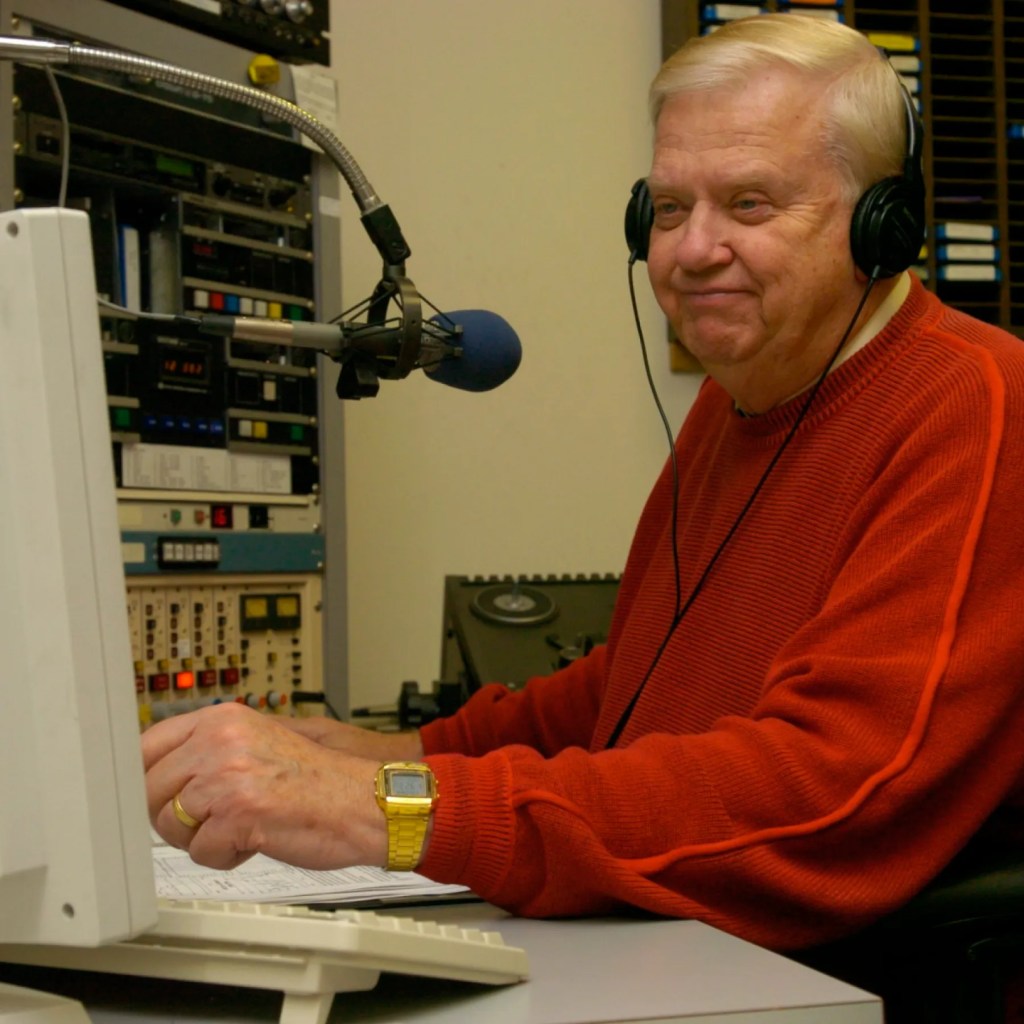
Samuelson was born on a dairy farm in Ontario, Wisconsin, where a leg disease left him for a time nearly crippled as a teenager. He would take classes for six months at a radio school. His first jobs were at small stations in Sparta, Appleton, and Green Bay. But it wasn’t until he landed at WGN radio (AM 720) in Chicago that he found his footing. His voice, if you will.
Fifty dollars a week was my pay when I started, and then they turned me loose to sell, and so I would get 10 percent of every commercial that I sold, and I think the price of a commercial on WKLJ, as I recall, was four dollars for a minute, so I’d get 10 percent of that for whatever I would sell. But I was learning, and I was doing something I loved. And it was a daytime station, seventeen miles from home, so I’d get up in the morning, milk cows, change clothes, go to town, and be a radio announcer, and then I’d get home in the evening in time to milk cows again.
I grew up listening to the radio in my Hancock home, with WGN one of the daily stops. Four voices alerted me as a boy that not all people have the same speaking abilities. Paul Harvey (precise enunciation), Earl Nightingale (deep sonorous tones), Grant Truner (folksy professionalism), Howard Cosell (a Brooklyn accent with the power to demand a listener continue doing so), and last but certainly not least, Orion Samuelson (with a perfect pacing of words) made that abundantly clear.
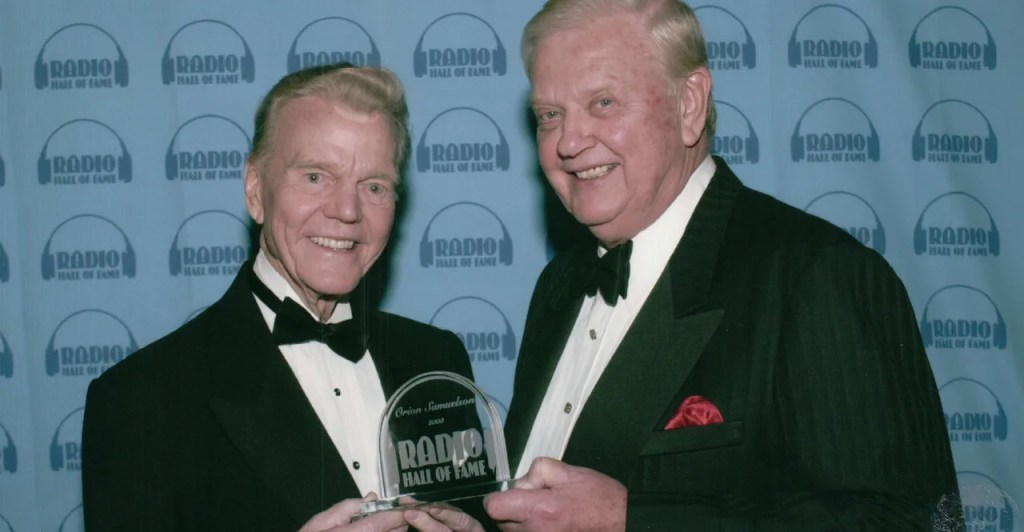
It was Samuelson’s voice that landed in my head and would never leave.
Tell us a little bit about the broadcaster’s voice that you’re so well-known for. When did that happen for you?
I guess it started to change probably when I got back on my feet in my junior year of high school, it began to change, and by the time I graduated, it had reached a good quality, and then over the years, it just sort of matures, and you learn how to use it a little bit more. It’s not something I trained, and as I said so often, I don’t hear myself the way other people hear me. I really don’t hear anything different or special about my voice— but thank God other people do, because—
DePue: When did you become aware that other people recognized that quality?
Samuelson: Oh, I would say in Green Bay, where people would start mentioning it, and then, you know, the farm people would mention it—those who were my main audience. But then here in Chicago, I have to be careful about the volume of my voice. If I’m at a restaurant, somebody will come up and say, “Hey, I know that voice. I listen to you.” Well, it’s flattering, but then I think, “Golly, do I talk too loud, or what?” But I was at the Cattleman’s Convention just a few days ago, and two or three of them said, “Boy, can’t miss that voice.” Well, thank you. I’m glad.
DePue: So it’s the voice more than the face that people recognize in your case?
Samuelson: Oh, yeah. Yeah. Although, since doing the television show, more of them do recognize the face, but it’s the voice first. It really is. And as I say, I don’t see anything different (laughs), but I’m glad other people do.
If by now you sense this column is nostalgic and warm-hearted, that is because there are those radio personalities who become friends in our home, the car, and we even carry their topics with us as we engage with friends and neighbors.

Orion was heard for 60 years on WGN, and when reading his book several years ago, I was struck that he was the staffer on air who read the news of the assassination of President John Kennedy. His broadcasting work as the agricultural reporter airing on the 50,000-watt clear-channel station allowed him to launch his own career, which in time included nationwide syndicated television. By the time he bid farewell to his radio audience, he had traveled to Cuba and met Fidel Castro, shaken hands in Moscow with Mikhail Gorbachev, and, the part of his life that punches home with me, interviewed every United States President from Dwight Eisenhower to the winner of the 2016 election. But it was his interview with Harry Truman, 20 years after the Missourian had left office, that probably left the most lingering impression on the broadcaster. (That is my assumption based on knowing the man over the decades on the radio and from his book.)
I did not grow up on a farm, but knew others in my rural community who didn’t feel the day was complete until they’d heard Samuelson’s steady, unmistakable voice crackle through the radio and share agricultural business news with them. If we want to continue with the nostalgic theme, stop for a minute and consider his voice being a companion in the cab of a tractor, a trusted guide through volatile markets, and a reassuring presence during the unpredictable cycles of weather, harvests, and policy shifts from Washington.
Samuelson had a rare gift: he could take the complex, often chaotic world of agriculture and translate it into something clear, grounded, and human. He delivered market reports with the same sincerity he brought to stories about rural communities, always with a deep respect for the people who feed the nation. His longevity wasn’t just a matter of tenure; it was a testament to the trust he earned, day after day, across generations.
On his 80th birthday, this WGN news segment was aired.
For many, his voice is woven into memories of early mornings in the barn, long drives down county roads, and kitchen radios humming beside a pot of coffee. He represented a kind of broadcasting that felt personal, because it was. It was rooted in place, in people, and in purpose.
Orion Samuelson leaves behind a legacy as enduring as the lush corn and bean fields we loved to talk about. His influence lives on in the countless farmers who relied on him, the broadcasters he inspired (he was one of the on-air voices who inspired me to venture into radio), and the communities he championed with unwavering pride.
A long career, a steady, remarkable voice, and a life well lived.
Godspeed.

 Caffeinated Politics
Leave a comment