
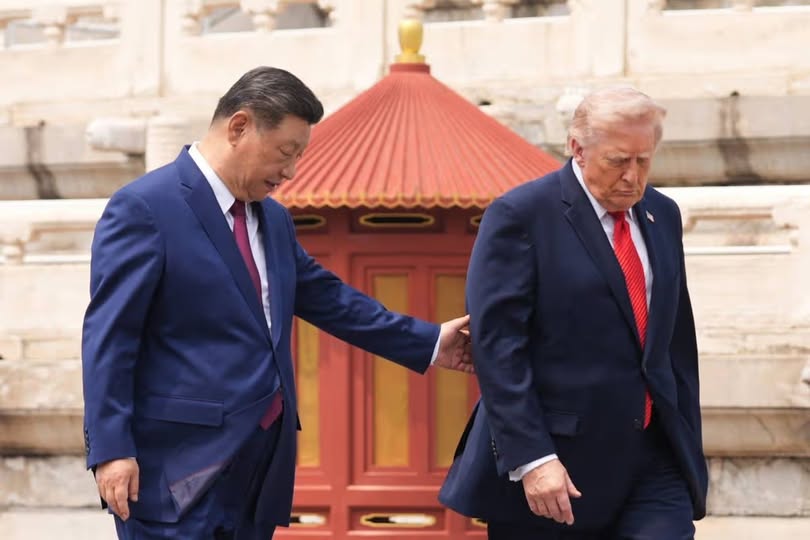
Leonid Brezhnev, the leader of the Soviet Union for 18 years, died on November 10, 1982, at age 75. Secretary of State Henry Kissinger was asked that evening how the personal relationships between Washington and Moscow would fare following the death. He made it clear that personal relationships were not the guiding force of international relations. A nation’s interests and needs were the drivers of foreign policy and diplomatic missions. As I watched the fawning, embarrassing displays by Donald Trump on his China trip, I thought of the basic rules Trump never learned or was curious about.
Trump was out of his depths as the summit between the United States and China was not meant to be a global edition of a personality‑driven reality show. I understand that Trump is an uneducated man and lacks awareness of so many things that any leader really must have a grasp of before being elected. I wanted to reach through the television set and yell at the sap that what was supposed to be front and center at the summit was the cold, unromantic pursuit of our national interests. Over and over, I thought of Kissinger, granite‑hearted as he was, who understood with unnerving clarity how silly Trump’s obsession with whether Leader A “likes” Leader B. That is the intellectual equivalent of replacing the State Department with a high‑school cafeteria, where “chemistry” at summits matters more than strategic alignments.
When Trump took this goofy path, President Xi knew he was not only going to take Trump’s school lunch money but also eat his food.
What I most admired about Kissinger’s realpolitik was how he stripped away the sentimental varnish. He knew nations collide, bargain, and pursue advantage. He didn’t need to like Beijing to negotiate with it, nor did détente require Moscow to pass a trust‑fall test. It required understanding what each side needed and where interests overlapped. Everything else was noise, the kind that Trump mistakes for substance.
Today, saying foreign policy is about interests rather than personalities is treated as impolite, even cynical. But the alternative is strategic incoherence, unstable alliances, and policy whiplash every time a new leader with a new mood takes office. We are seeing that manifest itself in glaring, ridiculous ways with this nitwit now in the Oval Office. When foreign policy becomes a mood board, the world becomes more dangerous, not less. The stakes are too high to hinge on whether two heads of state “get along.”
With Trump’s performance, I suggest we’ve reached a level of stupidity so profound it should be studied in a lab.
I urge that we model our further international relations on the pursuit of outcomes, not friendships. Personalities fade; interests endure. A serious country knows the difference.
Donald Trump, not a serious person, clearly doesn’t.


Leave a comment