
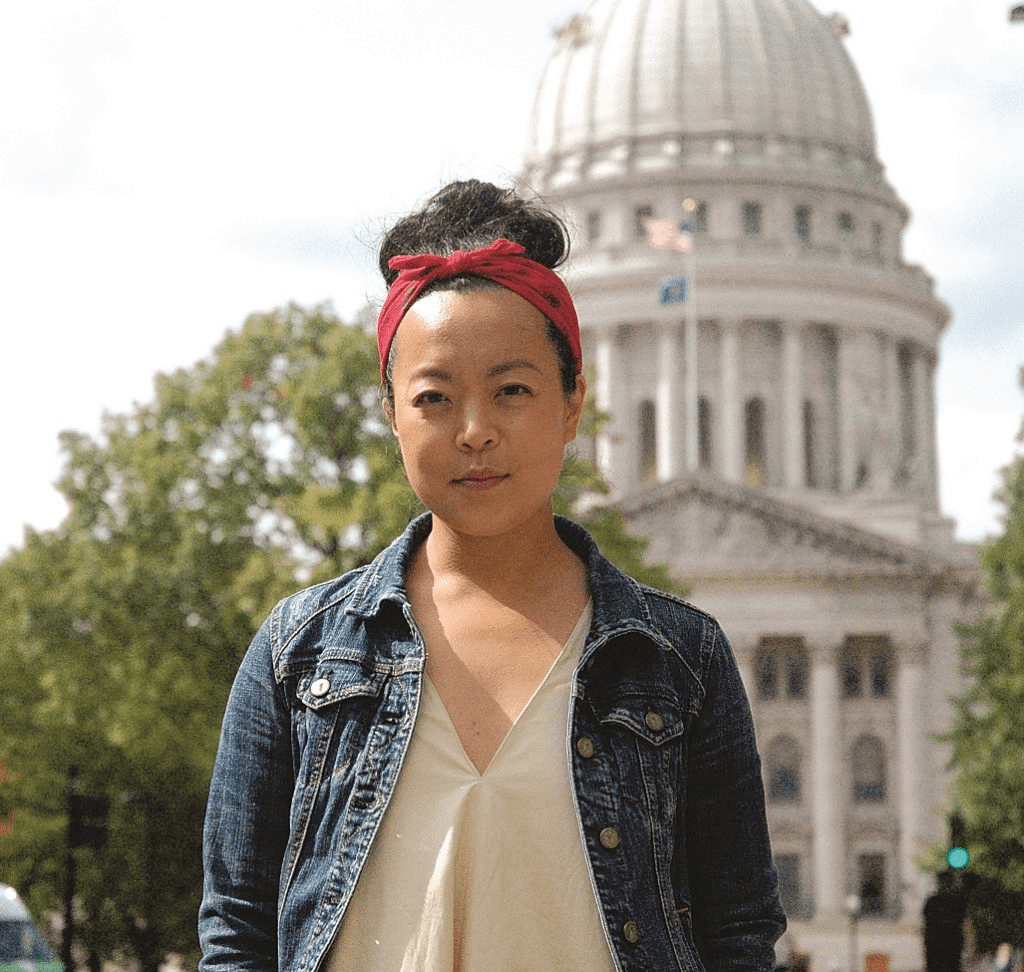
In 1980, when politics seemed more tame and polite, in comparison to what we have dealt with over the past decade, there was a term that almost all reporters and political analysts were fond of using. “The Big Mo” was famously coined by George H.W. Bush after he defeated Ronald Reagan in the Iowa caucuses, signaling a “big momentum” shift. As I watch the Democratic candidates for governor trek across Wisconsin and press their issues, it is apparent that Francesca Hong might be the contender who is creating the Big Mo as we head into summer.
Hong was first sworn in as Wisconsin’s 76th Assembly District Representative in 2021, becoming the first Asian American to serve in Wisconsin’s state legislature. She has since been reelected twice before announcing her campaign for governor.
Last September, I wrote a column arguing that she has a unique opportunity to connect with voters and carry a powerful message. At a time when Democratic candidates nationwide seem hard-pressed to communicate effectively to a certain type of voter, I wondered if Hong might be the bridge.
Days ago in Racine, she was doing that very thing.
She focused on public education, framing it as a democratic institution under deliberate attack.
“Public education is one of our last remaining democratic institutions,” she said. “So if you want to attack democracy, you go after public education.”
She argued that repealing the manufacturing and agricultural tax credit, which she said allows mega-corporations to pay almost nothing in state taxes, would generate enough funding to provide healthy school meals for all Wisconsin students, public and private, for four years.
“That bill is written, it’s ready to go, and we have the funds for it if we actually did the right thing in making corporations pay their fair share,” Hong said.
This weekend, Hong released a comprehensive policy plan to serve Wisconsin’s more than 300,000 veterans, with a promise to make ending veteran homelessness a cabinet-level priority, and raising the Veterans Assistance Grant ceiling from $3,000 to $5,000, along with creating “fast track” eligibility for veterans facing eviction or utility shutoff.
In my September column, I quoted famous writer Jimmy Breslin to help make the point that voters have much in common even when they feel tethered to their political tribe.
Boston in the 1970s was the location for strife and turmoil as poor whites and poor blacks faced each other over busing school children. Columnist Jimmy Breslin writes of this clash that there are “two groups of people, who are poor and doomed and who have been thrown into the ring with each other”.
Today, the issue that connects the two sides of the seemingly ever-deepening chasm in our nation is economic disparities. As such, the angry voices in rural red counties about jobs and wages and housing costs mirror the angst and concerns from urban centers over the same problems. Those who now drive the wedge issues or the cultural warriors who want their base to think that transgender individuals are taking over the local high school sports program hope the two separate economic halves of our politics stay divided. But what if there was a powerful voice to say otherwise?
I come from decades of watching candidates enter elective races with what I think can be fairly labeled as cautious centrism. They do not stray too far from what a consultant has come up with for talking points. So, as a politico, I am really interested in what Hong brings to this race. First, there is no searching for ideological foundations, as she is rooted in a framework of knowing who she is. Second, I expect to see a young, energized, and hopeful tide of young people get involved in the race. This summer, in numerous conversations with grad students, I asked if they and their friends are hopeful about the future. The common answer could be summed up with, “Are you kidding me? No!” I tend to think there is a sizable number in the electorate who want fresh perspectives and fact-based reasoning. Third, if there is that element among the voters who want to be disrupted, Hong can provide it with a message that will be inclusive and one striving for a better economic outcome for people all over the state. I might add that disruption is precisely what Wisconsin, and the Democratic Party more broadly, needs in 2026.
The Democratic race is still developing, with most candidates still little known, and many voters undecided. While I am supporting another candidate in the race, there is no denying the political energy Francesca Hong brings to this year’s election season. She has something special happening for her, and perhaps it truly is the “Big Mo’.


Leave a Reply