
Robert Caro is a name often bantered about in our home, especially when victors walk through our rooms with bookcases. The volumes of his work about Lyndon Baines Johnson are noted as they underscore the joy found in the past by an author, incredible researcher and powerful storyteller. He is what many book lovers and history buffs, such as me, call an essential American.
Over the past several years like so many others, I have been asking about the fifth and final volume of his Lyndon B. Johnson series. After a late-night search for an answer I was heartened to land on this article. However, he has stated that he is “not nearly done” and has acknowledged that the book will be very long and is still without a release date.
The first volume of The Years of Lyndon Johnson, The Path to Power, which is about Johnson’s early life leading up to his first failed campaign for public office, took seven years. The second, Means of Ascent, detailing Johnson’s eventual election to the Senate (an election that Caro’s groundbreaking research definitively established was stolen), arrived eight years later. The third, Master of the Senate, about Johnson’s years as Senate majority leader, came 12 years after that. Then another ten years passed before the publication of The Passage of Power, which ends in 1964 after Johnson has assumed the presidency following John F. Kennedy’s assassination. That book was published nearly 13 years ago.
“Easy,” I point out, doesn’t feel like a sufficient adjective.
“No,” he concedes. He modifies this to “much easier.” But a short while later he returns to the subject. “I mean, if I made it sound easy—if you saw my office, there’s a lot of crumpled-up pieces of paper.”
Caro is accustomed to questions and fearful commentary about when or whether he will complete this fifth volume. Yes, he has had the final words of that book sequestered away for a long time now—“oh, decades ago,” he says—but the book is still underway. He remains adamant that he won’t change or hurry his process or second-guess the credo that has served him well. “I believe you can learn things by just keeping reporting,” he says. “I mean, I was always taking too long at Newsday. That was my reputation: ‘Caro always takes too long.’” So, even now, he will write a Robert Caro book the way he has always written a Robert Caro book, cutting no corners. And he, like us, will have to discover whether the world will allow him time enough to complete it.
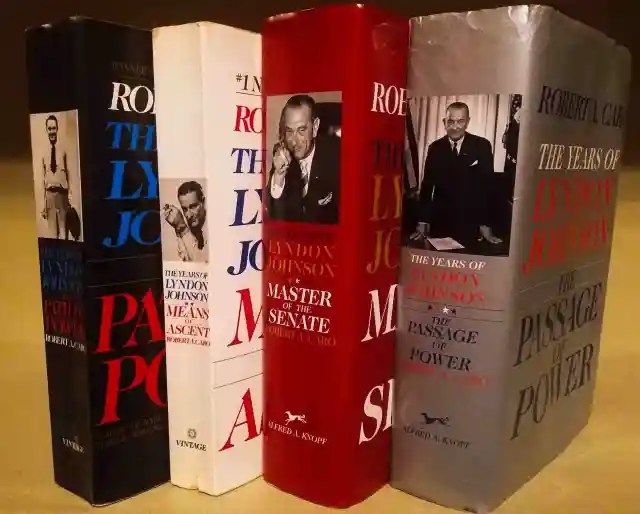
He is a real force in the publishing world because his research and talents with telling the story transcend scholarship to become a civic force. With over 900 pages already written for the long-awaited final volume he demonstrates the meticulous research and narrative mastery that have made his biographies essential reading for anyone seeking to understand American power. Perhaps the best one line to sum up the already over 3,200 pages of the four published volumes is how is did LBJ amass power, and what did he do when he had it in his hands.
His method is legendary: renting homes in the Texas Hill Country to absorb the landscape that shaped Johnson, rifling through archives for years, and conducting interviews with relentless precision. But what sets Caro apart is not just his rigor—it’s his moral clarity. He writes not merely to recount events, but to illuminate how power works, how it’s acquired, wielded, and often abused. In doing so, he’s ignited a passion for history across generations, reminding readers that understanding the past is essential to shaping a just future.
Caro’s influence is felt not only in libraries and classrooms, but in the quiet resolve of citizens across the nation. I have told family and friends that his books are not the placing of politics as red-meat spectacles but rather the consequence of our politics. I have read every word of the LBJ series and can state that Caro has a deep devotion to truth and context of the time and place where the events occur. It is absolutely a requirement for the context of history to be fully presented for any degree of the fullness and richness about the past to be understood.
I am hoping the unfinished pages allow for the complexity of LBJ’s final years in the White House and the remaining time in his post-presidential period be written with the same candor and examination that Caro’s previous works have achieved.


 Caffeinated Politics
Leave a reply to artistic01b4ed0e0a Cancel reply