
Be it how your local neighborhood association conducts its business or how the federal government operates for all, one thing links them both. An upfront process must be undertaken that brings together facts and data through the input of diverse perspectives so to shape a desired policy goal. Readers to this blog know that I am a process democrat. I firmly believe that the way in which governing takes place is the ultimate test of a republic.
Repeatedly on this blog, I have pressed how the process of governing needs to be transparent and made clear for those who follow the proceedings. Win or lose, all can state honestly that the rules were known and applied. The process must not be tainted or altered to get to the desired end.
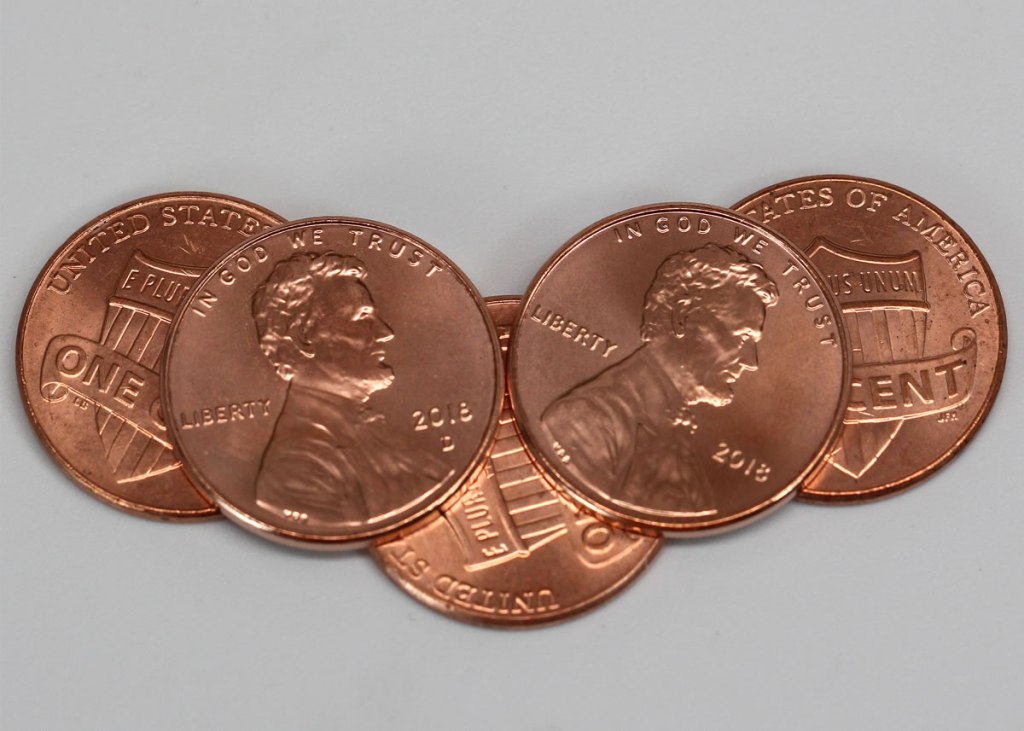
A prime example of this can be now found regarding Donald Trump’s wrong-headed directive in February to stop minting new pennies. It has caused a real problem as there is now a shortage of pennies in circulation and that has opened a bevy of legal and logistical problems for businesses and banks. While there has been dismay about the penny (or as Bloomberg radio informed listeners this week it is should be termed “cent”), it was the abrupt halt of its production that created immediate issues.
Still, the abrupt decision to get rid of the penny came with no guidance from the federal government. Many stores were left pleading for Americans to pay in exact change.
“We have been advocating abolition of the penny for 30 years. But this is not the way we wanted it to go,” said Jeff Lenard with the National Association of Convenience Stores.
Troy Richards, president at Louisiana-based Guaranty Bank & Trust Co., said he’s had to scramble to have enough pennies on hand for his customers since August.
“We got an email announcement from the Federal Reserve that penny shipments would be curtailed,” he said. “Little did we know that those shipments were already over for us.”
Richards said the $1,800 in pennies the bank had were gone in two weeks. His branches keep small amounts of pennies for customers who need to cash checks, but that’s it.
In some states and cities, it is illegal to round up a transaction to the nearest nickel or dime because doing so would run afoul of laws that are supposed to place cash customers and debit and credit card customers on an equal playing field when it comes to item costs.
So, to avoid lawsuits, retailers round down. That extra change can add up over tens of thousands of transactions. A spokesman for Kwik Trip, the Midwest convenience store chain, says it rounds down every cash transaction to the nearest nickel. That’s expected to cost the company roughly $3 million this year. Some retailers ask customers to give their change to local or affiliated charities at the cash register, in an effort to avoid pennies as well.
The Common Cents Act bill pending in Congress calls for cash transactions to be rounded to the nearest nickel, up or down. While the proposal is palatable to businesses, rounding up could be costly for consumers.
The abrupt end of the U.S. penny in the way Trump did it, offers a cautionary tale about the dangers of skirting established government processes. The way its removal was executed reveals that when leaders sidestep a deliberative process they risk undermining public trust, economic stability, and democratic norms.
The penny’s elimination wasn’t the result of a congressional vote or a robust public debate. It came via executive directive, a whim. This isn’t just about copper. It’s about precedents. The penny may be small, but its removal touches millions of transactions daily. Without a coordinated transition plan, rounding rules, or public education, the fallout lands hardest on low-income Americans and small businesses.
Government processes—hearings, votes, public comment periods—exist not to slow progress but to ensure it is thoughtful. They allow for economic modeling and as Bloomberg noted, contingency planning. When these steps are skipped, even well-intentioned reforms can backfire. The penny’s demise could have been a model of bipartisan efficiency. Instead, it has become another symbol of Trump’s unbalanced way of acting in the Oval Office.
This also strikes at a serious concern for our nation as it relates to the balance of powers. Bypassing an ordered process erodes democratic accountability. When major decisions are made by whims and hunches, citizens lose their voice. Congress, which represents the people, was sidelined until after the fact regarding the penny. Oddly, the majority party seems fine with being pushed aside by the executive branch.
Process matters. There are always louder voices that will try to out-shout the good-government types, but we must stand with those around the nation who know that it is not the end results that matter as much as the means which allowed for an outcome to be reached.
That all may be boring for many to ponder, but it is vitally important to our democracy that we all claim to embrace. Be it in statehouses that dot this land, or in any family probate there is one thing that is crystal clear. Try and circumvent the required process and there is a mess.


 Caffeinated Politics
Leave a reply to Gregory Humphrey Cancel reply