
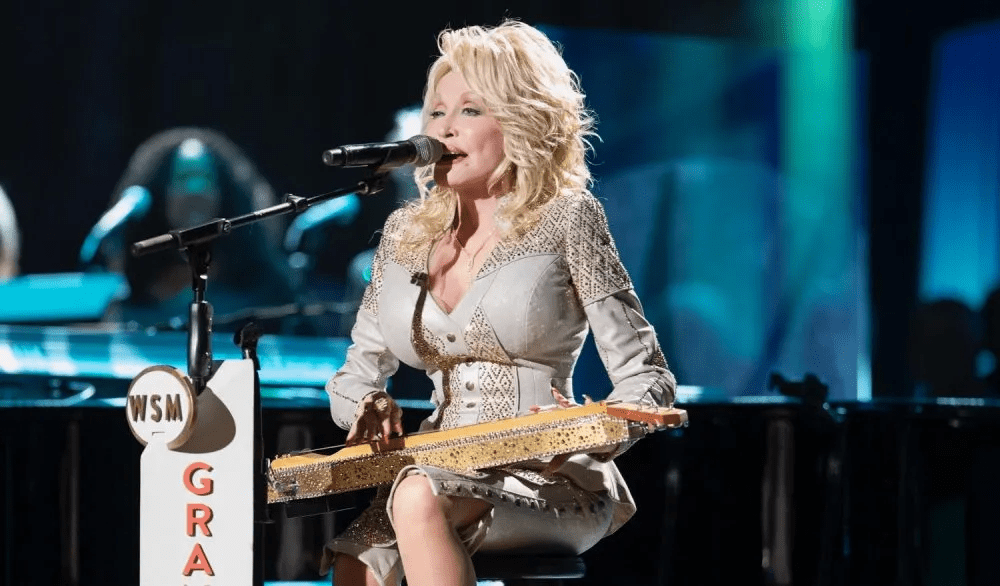
Dolly Parton took the stage at the Dane County Coliseum on October 29, 2005. It was the first major concert that my husband, James, had ever attended. Walking down an onstage staircase, she held the audience in the palm of her hand from the first note. I know that sounds trite. Except it is the truth. Through decades that honed her musical prowess on stage, she lifted her voice to showcase her talents, yet blended her homespun sincerity and roots in life and music into her performances. With the famed white autoharp, she sat on stage and, with no other accompaniment, sang Coat of Many Colors. Not a sound other than hers was heard in the Coliseum. It remains a powerful recollection.
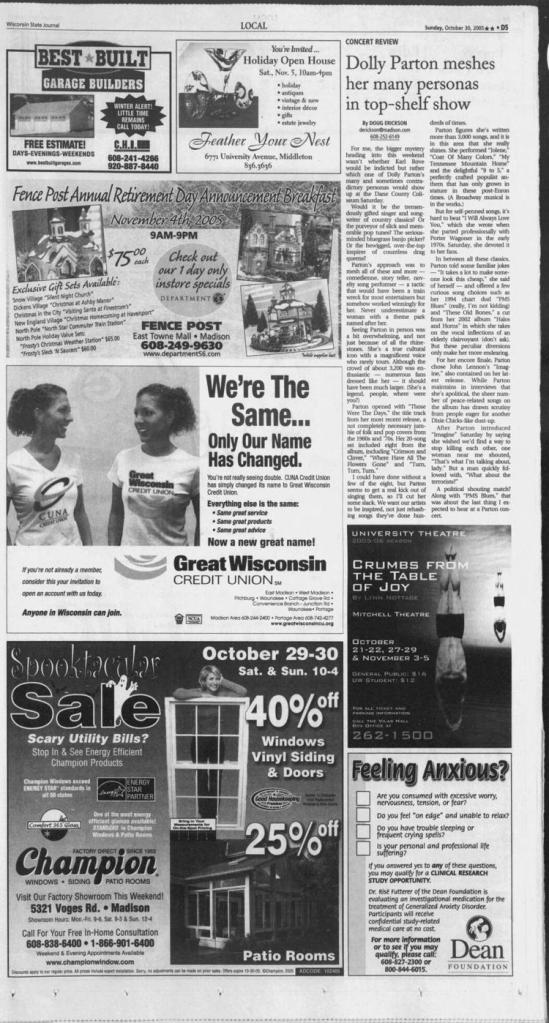
The Wisconsin State Journal wrote of that show with glowing words.
Would it be the tremendously gifted singer and songwriter of country classics? Or the purveyor of slick and memorable pop tunes? The serious-minded bluegrass banjo picker? Or the bewigged, over-the-top inspirer of countless drag queens?
Parton’s approach was to mesh all of these and more — comedienne, storyteller, novelty-song performer — a tactic that would have been a train wreck for most entertainers but somehow worked winningly for her. Never underestimate a woman with a theme park named after her.
Today, Dolly died at age 80, leaving the world in disbelief and sadness.
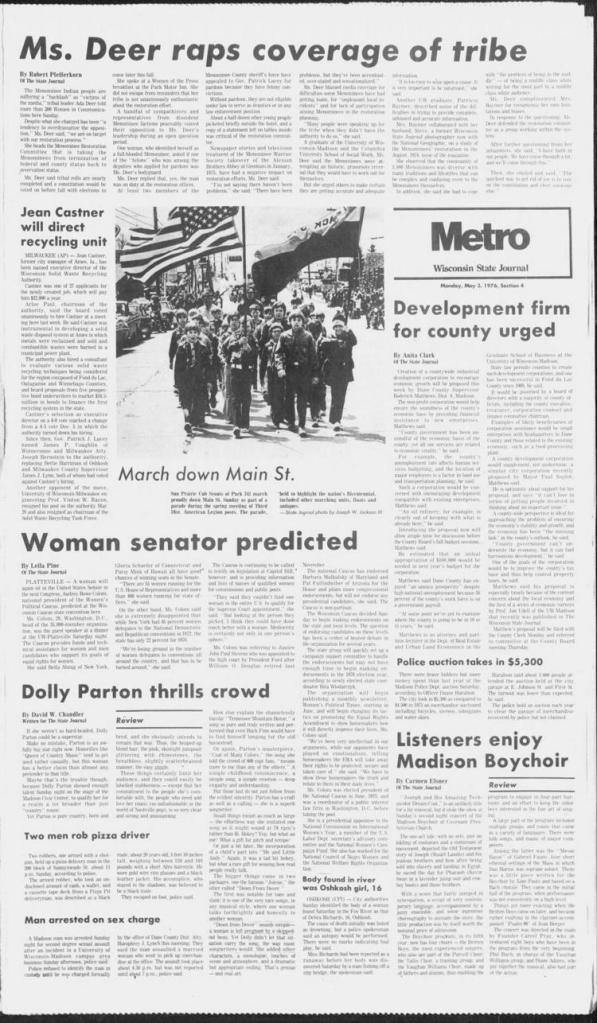
She performed in Madison twice during her storied career. She appeared on May 2, 1976, at the historic Capitol Theatre, which later became part of the Civic Center complex. David Chandler’s review for the Wisconsin State Journal mentioned the singer’s homespun country nature in songs such as My Tennessee Mountain Home and wrote, “If she weren’t so hard-headed, Dolly Parton could be a superstar.”
Her concert came shortly after her departure from Porter Wagoner’s television show and right before she launched her nationally syndicated variety show, Dolly. Being a superstar proved not to be a problem.
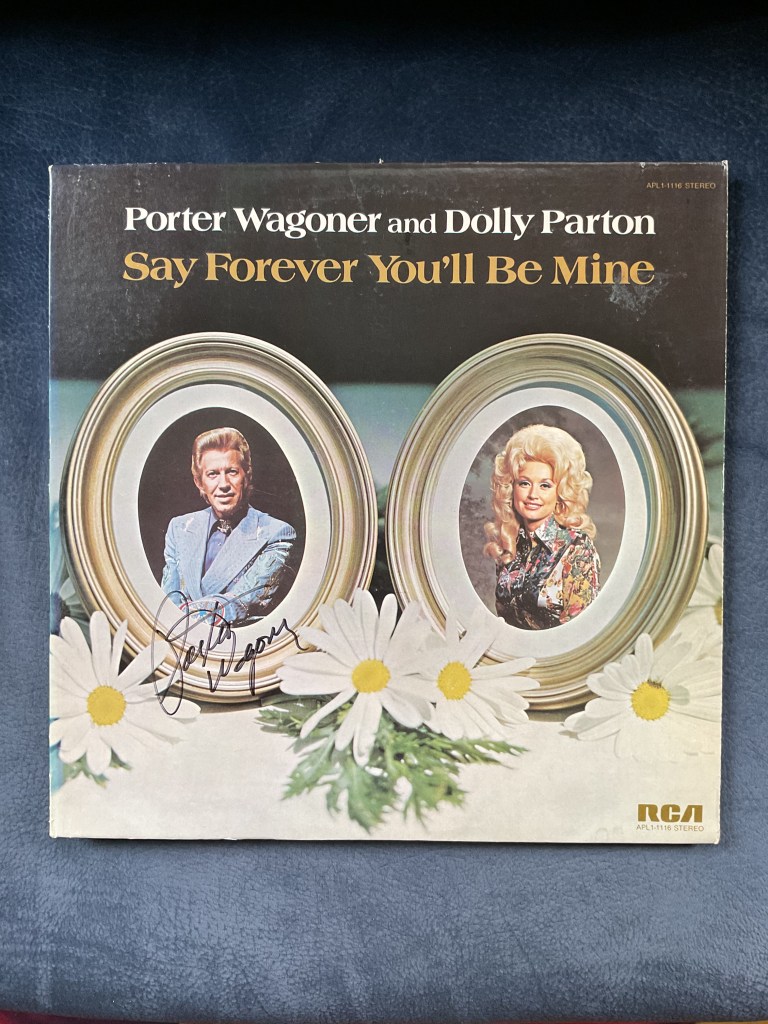
Speaking of Porter and Dolly, it was in the late 90s that I had the chance to meet Wagoner backstage and chat for a couple of minutes while also getting his autograph. He laughed and asked. “How long have you been carting that old thing around for my autograph?” My hope was to get Dolly to sign it and make it part of musical history. It never came to be.
I know Dolly made a name with a voice, country roots, big hair, a figure some men talked about a great deal, and truly savvy business acumen. But there was far more to the woman. She was also supremely kind and generous, with a large giving nature. Her philanthropy has shaped lives far beyond the glow of the Opry stage (inducted into the Grand Ole Opry on January 4, 1969) or the long list of hits recorded on Billboard. Dolly did not just sing about dreams; she funded them.
Her devotion to reading is the clearest example of that love to be more than just a singer and national icon. For decades, Imagination Library has proven to be a national literacy engine disguised as a bedtime story. Dolly understood early that a child who reads becomes an adult who imagines, questions, and builds. So, she started sending books, millions of them, to kids who might never have had one of their own. No fanfare, no political grandstanding, just a steady stream of stories landing in mailboxes. In a country where public education is constantly under siege, Dolly’s book program was a commitment to the future.
Her support for LGBTQ+ people was her true nature, making a difference for Americans who often felt isolated and apart. To say she was a decent human being would be a severe understatement. She never used guys like me as a political talking point but simply treated gay people as people. Full stop. Long before corporations discovered Pride Month, Dolly told her LGBTQ+ fans they were welcome, valued, and safe at her concerts.
And then there’s her commitment to Black Americans, a part of her legacy that deserves far more attention than it gets. Dolly consistently acknowledged the Black musical traditions that shaped her own sound and credited the artists who influenced her. We, as a nation, still struggle to tell the truth about our own cultural inheritance, but Dolly had no such reservations.
Over the decades, I’ve heard some say Dolly was a courageous woman. I guess that is true. I see her, however, a bit differently. I see a good woman, kind, caring, and a talented powerhouse. She used her genuine kindness and good nature to move through life, and that looked like courage to others. For her, it was just being herself. At her foundation, goodness lit her way. Through her actions, she might have been saying that the world can be gentler than it is now, and that she would try to make it so.
Godspeed, Dolly.


Leave a Reply