
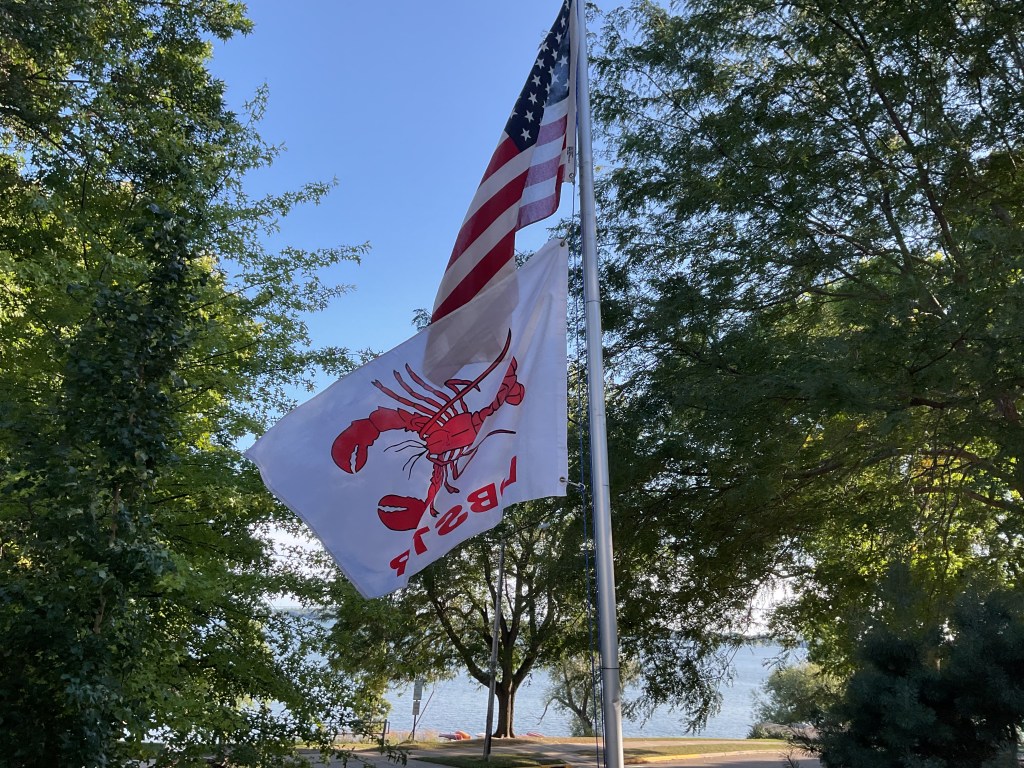
On Saturday, part of the running portion of the half Ironman competition took place on our street on Madison’s isthmus. To greet the runners, we flew a lobster flag. We had taken down the Canadian flag we had been flying in sympathy with our northern friends. But both the Maple leaf and the lobster underscore the same bottom line. Donald Trump’s tariff wars are ludicrous.
This weekend, The Hill reported on the plight of lobster fishermen.
The Maine lobster business has found itself in the crosshairs of a trade war and congressional infighting as rising costs and other pressures leave the heritage industry in a precarious state.
The war with Iran has sent diesel fuel prices soaring at a time when warming waters mean lobstermen are traveling further offshore to look for lobster.
Profit margins have tightened significantly on the luxury good over the last 15 years, new research shows, while across the board, the industry is battling uncertainty.
Canada, already in a trade war with the U.S., threatened to respond to 50 percent tariffs imposed by President Trump with a 25 percent retaliatory tariff on U.S. lobster.
Such a move would be devastating for the Maine lobster industry, which is heavily intertwined with Canadian companies.
Though Canada has a much shorter lobstering season, they have significantly more processing capacity, and Maine lobster is often peeled and packaged across the border before returning to the U.S.
Canada quickly backed away from the plan to impose tariffs on lobster, but it unnerved those who work so closely with partners across the border on a daily basis. It’s also unclear whether the matter could surface again given tensions between the two once-reliable trading partners.
James, my husband, grew up in Maine, and we often talk about lobsters and the pressure on the industry at our home. The lobster is clearly the state’s unofficial mascot, but the industry is at a point where even the most weathered Yankee is unsure what is coming next for the profession. Climate change is also a factor as the Gulf of Maine is warming faster than most coastal waters, pushing lobsters northward and into deeper, cooler waters. Higher diesel fuel costs add another burden for these businessmen. Juvenile lobsters, notoriously picky about their habitat, are finding fewer suitable places to settle. Problem upon another problem.
This leaves some unsettling data points to consider.
Start with the numbers. Maine’s lobster haul, once a picture of stability at around 20 million pounds a year through the mid‑20th century, exploded in the 2010s — topping out at nearly 133 million pounds in 2016. But the boom didn’t last. By 2025, landings had dropped to 79 million pounds, a steep decline from the peak.
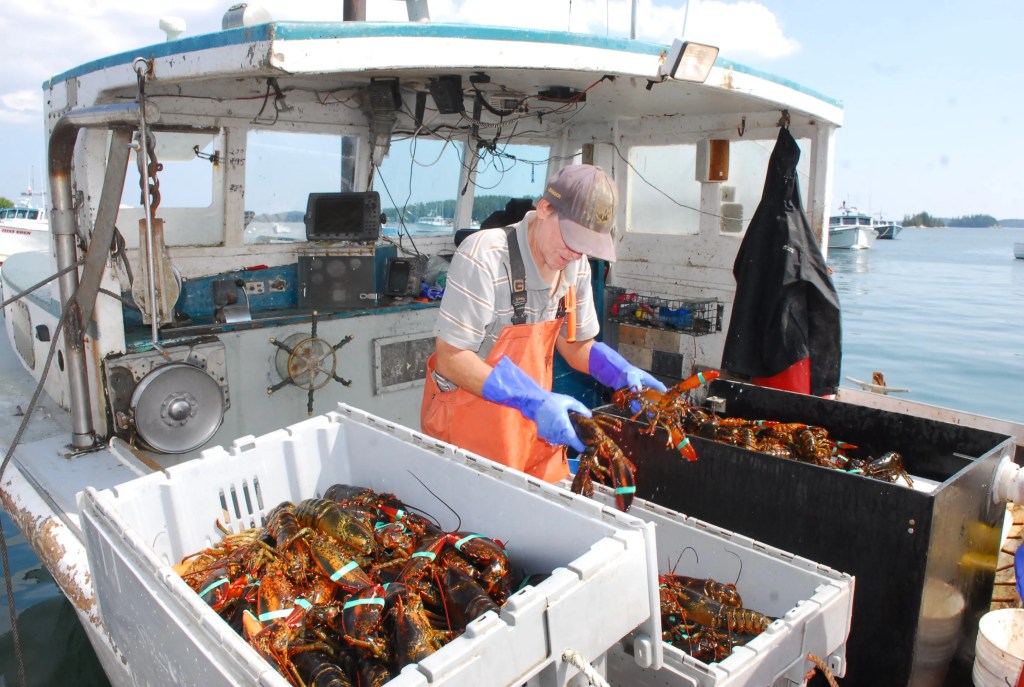
The very last thing Maine lobster fishermen need is more tariffs and global trade uncertainty from Trump. This unnecessary chaos adds another layer of instability, especially given how intertwined Maine’s lobster economy is with Canadian processors and exporters. Through it all, these hardy folks work hard, and despite the turbulence, the industry remains a financial powerhouse. Even in a down year, Maine’s lobster fleet generated more than $461 million at the docks in 2025. But we need to recognize what they are losing and how best to turn a profit in an industry that’s facing harsh winds.

 Caffeinated Politics
Leave a comment