An election ends two campaigns. It does not end our shared responsibility to govern, respect one another, or preserve the institutions that hold our democracy together.
Sunday morning, I heard an interview on This Week with George Stephanopoulos where Democratic Senate winner Abdulrahman Mohamed El-Sayed said that the Republican opponent, Mike Rogers, has not called with a congratulatory call. I was saddened to hear that. That telephone call is not an empty formality. I strongly suggest that it is connective tissue of a functioning democracy. Something we all need to be aware of, and should continue to do.
We have read enough history, or watched enough election conclusions over the years, to fully grasp that the emotions at the end of any competitive race are all over the map. The disappointment of losing can be profound, and the exhilaration of winning can be equally consuming. Sometimes it can be hard to track down the other person on the ballot to congratulate them. But in the era ofc ell phones, obviously, less so.
That is why God made the morning after. And what happens on that morning matters.
What plays out the morning after affirms that the democratic process matters. I write those words not from the viewpoint of 2026. But from 1988. I learned the importance of that concession and congratulatory phone call firsthand.
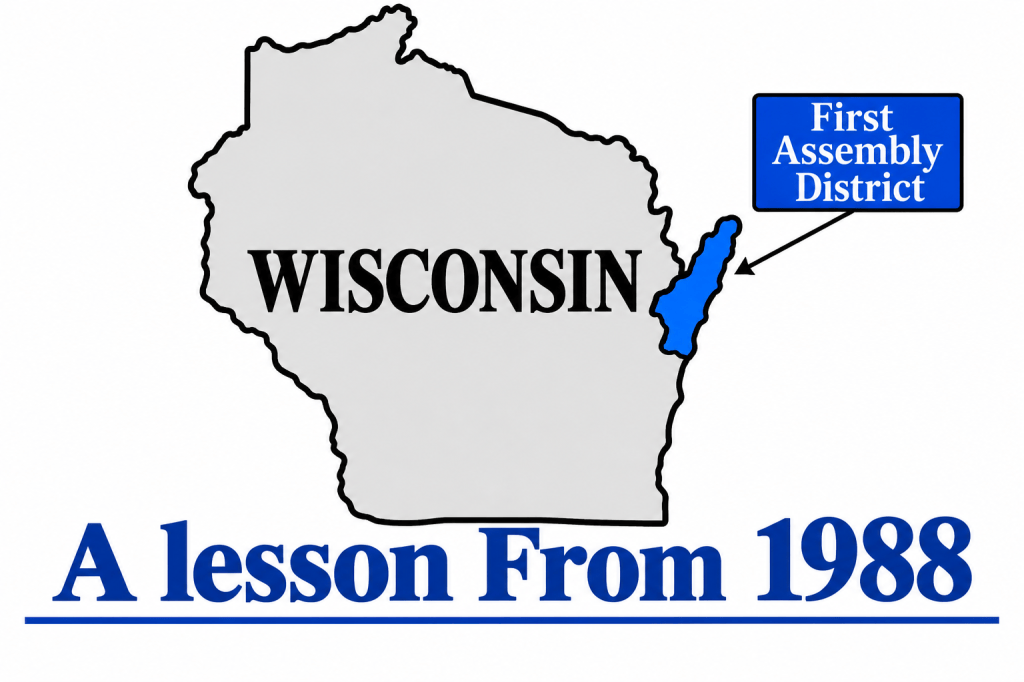
In 1988, I was involved in what was then the most expensive state assembly race in Wisconsin. It was an intense campaign, with substantial stakes and considerable emotion. Representative Lary (one r) Swoboda was running for re-election in the First District. Before his first election many years earlier, a Republican had held that area for almost a hundred years. Lary won the 1988 race, and on election night we were all out and about in Kewaunee County.
The next morning, I woke up in Swoboda’s home and was in the kitchen drinking coffee when the phone rang. His wife, Jan, answered the call and said, “I will put him on.” Then she mouthed the words “It’s Bob ” to Lary as she handed the receiver over. The Republican nominee, Door County Clerk Bob Papke, talked with Lary for a minute and offered congratulations and thanks for a hard-fought campaign.
I sat there and listened to the short, cordial conversation. I watched Lary, and he actually stood taller. I recall Jan looking at her husband, and I did not need to be told she was proud of him. The call was hard, no doubt, for Papke to make, given that every ounce of might had been poured out from GOP coffers (well over $50,000) to defeat Lary.
That call mattered because Papke understood that the campaign was over and that something larger had to continue. Papke not only acknowledged the voters’ decision, but also reinforced the expectation that government must continue, and our communities must function. People who have disagreed must still find ways to work together.
That is what political normality looks like.
We must not lose it.
A congratulatory call does not confer legitimacy that voters have not already established. Nor does it require the losing candidate to endorse the winner’s agenda. It simply recognizes the conclusion of a democratic contest.
Mike Rogers needs to make a call.
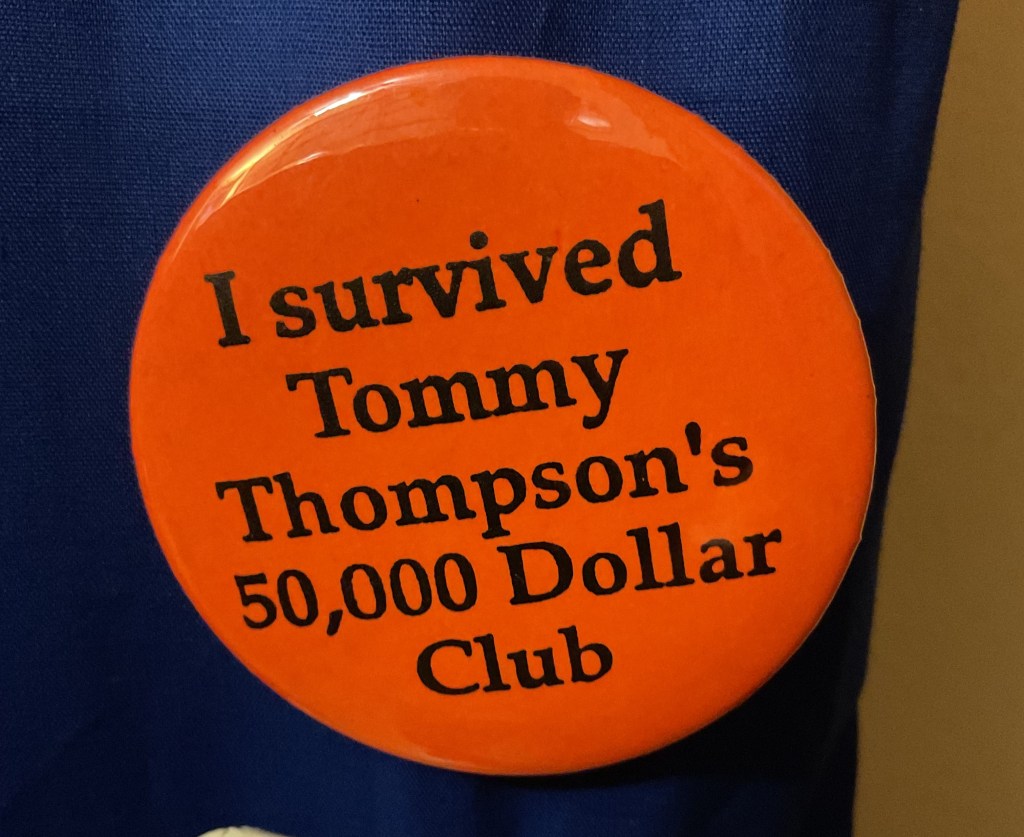
After the election in which Swoboda withstood Governor Tommy Thompson’s fundraising blow to defeat him, we had campaign buttons made to commemorate the race. Lary would wear one on the assembly floor in the new legislative session.


Leave a Reply