
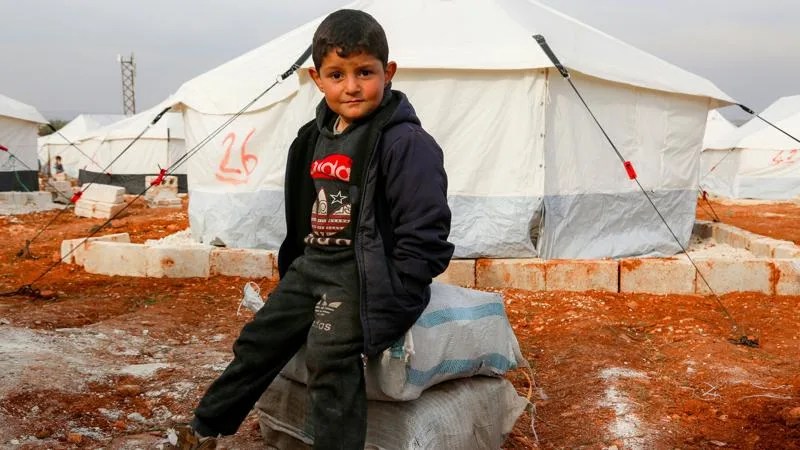
The severe consequences of Donald Trump’s callous disregard for sound governance are front and center. Every day in multiple ways. One of the international efforts he destroyed was the U.S. Agency for International Development, commonly referred to as USAID. It was the primary U.S. government agency leading international development and humanitarian aid, aimed at ending extreme poverty, strengthening democratic societies, and promoting resilience. That program epitomized our nation’s effective use of soft power. As of early 2025, USAID began shutting down operations following a funding freeze and restructuring into the State Department, with extensive staff reductions. With Trump’s Iran War proving to be a horrific crisis, the lack of USAID programming is making headlines.
This morning, an Associated Press news story caught my attention in this regard
Humanitarian organizations under intense strain because of the United States’ steep cuts to foreign aid say they are scrambling to find the funds needed to respond to the war in the Middle East, where millions of people have already been displaced by the widening conflict.
U.S. President Donald Trump’s decision last year to dissolve the U.S. Agency for International Development — once the world’s leading donor of humanitarian assistance — forced aid groups around the world to fire tens of thousands of staffers and shutter lifesaving programs. Now, some of those same groups are struggling to mount a response in the Middle East. Already, the United Nations’ refugee agency, UNHCR, estimates 3.2 million people inside Iran and 1 million people in Lebanon have been displaced since the U.S. and Israel launched strikes against Iran on Feb. 28.
Though the U.S. only spent around 1% of its budget on foreign assistance, Trump’s now-shuttered Department of Government Efficiency, or DOGE, dismantled USAID after the president dubbed it a waste of money
Not for the first time, an essential truth emerges from the ruins of war. Military strategy alone cannot prevent a humanitarian catastrophe or long‑term instability. This is where USAID becomes indispensable. The agency’s mission was not only to deliver aid, but to strengthen societies so they can withstand conflict and recover from crisis. In moments like this, as the Iran war rages, when conflict has spread across borders and disrupted global markets and endangers millions of civilians, USAID’s work is not a luxury. It is a strategic necessity.
As we know, as the conflict continues, the displacement of people grows, food insecurity looms larger, and medical shortages are growing at a pace that local governments and NGOs cannot manage alone. USAID had the scale, logistics capacity, and global partnerships to mobilize emergency assistance quickly. Its teams were capable of deploying food aid, medical supplies, and shelter materials within days, not months. In regions affected by Trump’s Iran war, these investments would make the difference between a generation growing up with opportunity or one growing up amid chaos.
While military action often dominates headlines, development assistance is one of the most effective tools the United States has for shaping global outcomes. USAID’s presence signals that the U.S. is committed not only to security but to human dignity and long‑term partnership. That matters in a region where trust is scarce and geopolitical chaos is intense.
When humanitarian crises go unanswered, problems balloon. Refugee flows destabilize neighboring countries. Economic collapse fuels extremism. Health emergencies cross borders. The ripple effects eventually reach the United States through global markets, migration patterns, and security threats. Investing in USAID is far cheaper than responding to the consequences of unchecked instability.
Just another colossal mess that Trump created, and the next president will need to address and fix.


Leave a comment