
I worked on this column over the past week, and with the World Series underway, I’m releasing it today.

The Milwaukee Brewers’ run to the 1982 World Series arrived at the start of my broadcasting years at WDOR AM-FM in Sturgeon Bay. Seven weeks earlier, I had landed my radio job. I was still getting comfortable behind the control board, learning the rhythms of broadcasting, and trying to convince myself I truly belonged there. Then suddenly came the World Series.
For much of Wisconsin, it was a historic sports moment. For me, it was a front-row seat to an entirely different story.
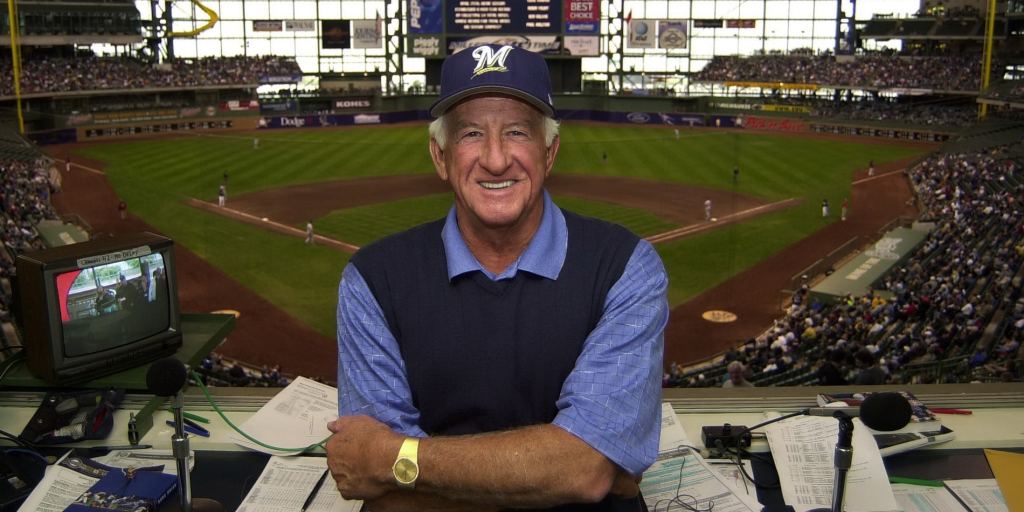
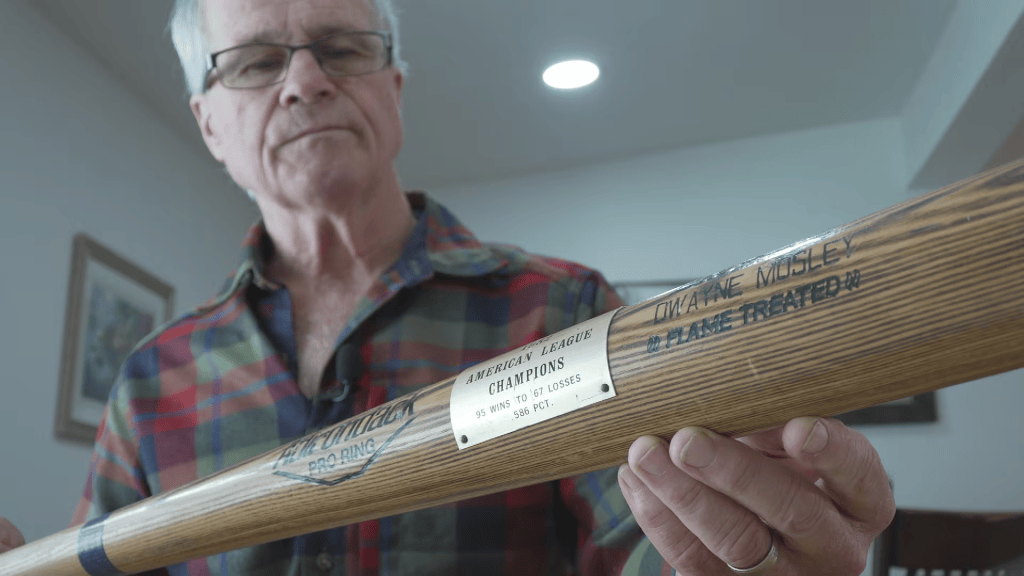
The station promoted the broadcasts heavily. Viewers were encouraged to turn down the television sound and listen to Bob Uecker and Dwayne Mosley on the Brewers Radio Network in Wisconsin. I knew more pople were listening to WDOR during those October evenings than at any other time since I’d arrived. The stakes felt enormous.
I think it’s important to write that radio itself was different then. Far from how radio stations do their work today.
Every commercial lived on a cartridge, a bulky tape format akin to an eight-track tape that my younger readers might struggle to imagine. Before digital automation, every advertisement was a physical object that someone had to select, arrange, and play by hand. During the World Series, every commercial slot was sold. Every cart had a place. Every sponsor expected perfection. The prices they paid for those spots demanded nothing less.
If I stacked all the commercial carts required for a single game broadcast, the pile would have reached from my feet above my hip. And heaven help me if they somehow slipped and fell out of order as I transported them from a smaller studio into the main studio for the night’s broadcast.
I knew no time during my then-brief radio career would bring more people to hear my voice. Each hour, during the game, network coverage paused for station identification, per FCC rules. Bob Uecker would toss it back to the local affiliates, and for ten seconds, the microphone was mine.
I recorded multiple versions and put them on a cart until they were perfect.
“This is WDOR FM, Sturgeon Bay, Wisconsin. Stay tuned for local news after the game.”
“This is WDOR FM, Sturgeon Bay, Wisconsin. The Bay-Lake Fishing reports follow local news after the baseball game.”
Part vanity. Part nerves.
Mostly nerves.
A fellow broadcaster I knew had left one station for another and accidentally identified the station he no longer worked for. It happens. Radio people are human. For these reasons, I desperately wanted everything to go right.
WDOR was a small-market station housed in a building that already looked like a 1950s survivor. The equipment was aging. The décor would not have impressed anyone from a major metropolitan market. During summer, the studio could become uncomfortably warm. But during October, with a chill in the air and baseball on the radio, the place felt perfect.
That studio had already produced some of the funniest moments of my broadcasting career. One afternoon, I was on the air when the station owner and the station manager (dad and son) were at the National Broadcasters Association meeting. Morning man and 24-hour comic, Tom Wagner burst into the studio waving what looked like a breaking bulletin from the UPI teletype machine.
“Trevor!” he shouted. “Hot news story just off the wires!”
He literally meant it.
The sheet of teletype paper was on fire.
He charged into the control room, carrying the flaming “news bulletin” and trying unsuccessfully to keep a straight face. The laughter that followed may have been the most memorable unscripted moment of my broadcasting career. Thankfully, a nearby metal wastebasket was ready to receive the remains of the scoop.
On garbage night, I would put on a particularly long record and dash outside to wheel the overflowing trash barrels to the curb. Newspapers, ad copy, teletype paper, discarded scripts, promotional materials. The station generated mountains of paper every week. I did the same during one World Series broadcast. Years later, I started to wonder what might have happened if a gust of Door County wind had slammed the front door shut while I was outside. The front door locked automatically after hours, and I always put my keys in a jacket pocket because I disliked the feel of them on my legs hour after hour behind the microphone.
Can you imagine the door locked, me outside, and the World Series airing inside with no one at the board? How soon before the cosmos would implode? That nightmare is something perhaps only a broadcaster can feel in his stomach.
Perhaps that’s why I always remember a story Dan Rather wrote in a book from his early radio days. As the story goes, he put on a lengthy church program on an album sent to the station and played it each Sunday morning. He knew he had time to drive into town for donuts and get back before the album was finished. He had his donuts and listened to the radio as he drove back to the station. That is when he heard the skip on the album, which let the preacher say the same thing over and over and over again. The preacher’s sermon had become stuck on a single phrase.
Unfortunately, the phrase was: “Go to hell.” “Go to hell. ” Go to hell”
Every broadcaster instantly understands the feeling that story creates.
The World Series broadcasts ran for hours. Pregame. The game itself. Postgame. Highlights. Then Mosley would send down the line a 90-second sports report to air during our sports reports the next morning. Eventually, Bob Uecker recorded promo spots for the next day’s World Series game.
Let’s just say that by the time those late-night promo recordings happened, no one in the announcing booth at the ballpark was drinking iced tea. There may have been iced tea in the glass, but it was mixed with something stronger.
Uecker’s exhausted, often hilarious attempts at delivering promos produced comedy gold. He would stumble over words, lose his train of thought, crack himself up, and start over. Somewhere in Wisconsin, on the radio network, other broadcasters kept such classic moments for posterity. I didn’t.
I was not a sports fan. That’s the confession buried in all of this. While much of Wisconsin lived and died with every pitch, I felt strangely detached. I didn’t particularly care whether the Brewers won or lost. The games simply didn’t stir anything emotional in me.
What interested me wasn’t the baseball. It was the radio station. The machinery. The rituals of broadcasting.
While listeners obsessed over box scores, I spent innings straightening piles of paper across the station, organizing carts, cleaning counters, and preparing local newscasts. During the Brewers’ World Series run, WDOR may have become the cleanest radio station in Wisconsin history.
After the games, my work often just began. Late-night newscast, fishing report, and making sure a bevy of ABC Radio Network commercials played, even if a game was on the air. I poured myself into those newscasts because I knew the FM signal reached far beyond Sturgeon Bay. Somewhere out there, listeners who ordinarily never heard our local news might still be tuned in after the game. I wanted the presentation to sound bigger, sharper, more important than simply reading community announcements and minor police reports. This was my chance to be heard.
Today, while another Brewers World Series captures Wisconsin’s attention, I find myself thinking less about baseball and more about that little radio station from forty-four years ago. Just last night, while walking with James on State Street in Madison, I noticed Brewers shirts everywhere. The excitement was unmistakable. Suddenly, I found myself back in that warm studio in Sturgeon Bay.
Back among the carts and turntables, I smelled hot electronics, surrounded by stacks of teletype paper. Hearing Bob Uecker’s voice echo through the control room. And I recall grabbing some food at the local County Kitchen in Sturgeon Bay early one morning. The coffee was endless, and the food was dependable. A restaurant employee poured coffee and started talking about baseball. I said I worked at WDOR, the station he and his co-workers listened to while they worked. “You were so lucky to have heard all of it.”
I smiled politely. That chapter of life now seems far warmer and almost perfect.


Leave a Reply