
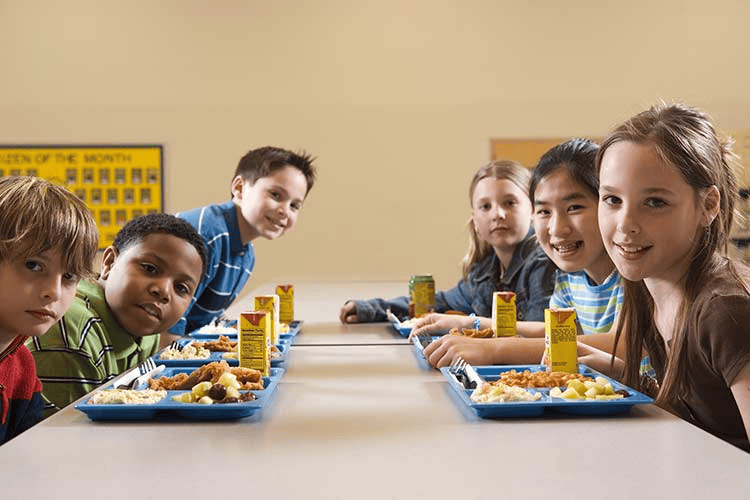
With Democrats poised to take over the Wisconsin Legislature in January (it still seems almost unreal to write that phrase), lawmakers will spend long hours pondering how best to fund everything from roads and state parks to universities and public schools. Amid ensuring needs are met and priorities are set for matters long neglected in recent years, it’s time to finally settle, once and for all, a basic issue. Let our state resolve that never again will a child enter a school wondering how lunch will be paid for or what embarrassment might land on a child who is known to need financial support at lunchtime. This is not so much a policy issue. It is a moral issue.
The case begins with a simple fact that food insecurity is real in our state. We read the papers and watch the news about the growing needs of food banks in our state. Although the United States Department of Agriculture has canceled its collection of food security data in the Trump Administration, we see the needs in our communities. While it is easy to see in large urban areas like Madison and Milwaukee, make no mistake: in rural areas like where I came from, in communities from Hancock to Hayward, food needs exist in homes. Children in those homes should not then have to confront, at any level, issues about food and how those meals are paid for at local schools. Every child in Wisconsin is legally required to be in a classroom. If the state requires attendance, the state should ensure students are fed while they are there.
Feeding America Eastern Wisconsin reports that roughly one in five children in its service area now lives in a food-insecure household. Meanwhile, a statewide survey cited by the Wisconsin Department of Public Instruction found that one in four Wisconsin high school students reported being hungry during the previous month because there was not enough food at home.
Research consistently shows that students with reliable access to nutritious meals have better attendance, improved concentration, fewer disciplinary problems, and stronger academic performance. Conservatives have to face the truth on this matter. School meals are not a social program separate from education. They are part of education itself.
And there is plenty of precedent. According to the Wisconsin Department of Public Instruction, states including California, Colorado, Maine, Massachusetts, Michigan, Minnesota, and Vermont have already correctly adopted long-term universal school meal programs. The sky did not fall. Their schools did not collapse. Their taxpayers did not revolt.
Now, the moral argument that I strongly suspect a wide swath of state residents support. We simply must eliminate the stigma that too often comes with receiving assistance. Children are remarkably aware of who is paying full price, who qualifies for reduced meals, and who receives free lunches. Even when adults try to protect privacy, students often notice. Kids know more than we often realize. For many children, that awareness can create embarrassment, shame, or a sense of being different from their classmates. That must end.
In my middle school years, a friend needed free lunches. Part of his way of paying for food was to be responsible for making sure all the garbage was picked up and the large plastic bags tied and placed in a corner. Along with another guy, we would help him so he could have some time with us before classes resumed. I recall how he expressed his unease with us helping him. He was embarrassed and frustrated. Kids know when they’re singled out, even with the best of intentions. Lunch debt, cafeteria shaming, and the stigma of “free lunch” labels erode self-worth and lower self-confidence. Universal programs restore dignity.
I ask Governor David Crowley and the Democratic majority to do this most basic policy change for the kids of our state.


Leave a Reply