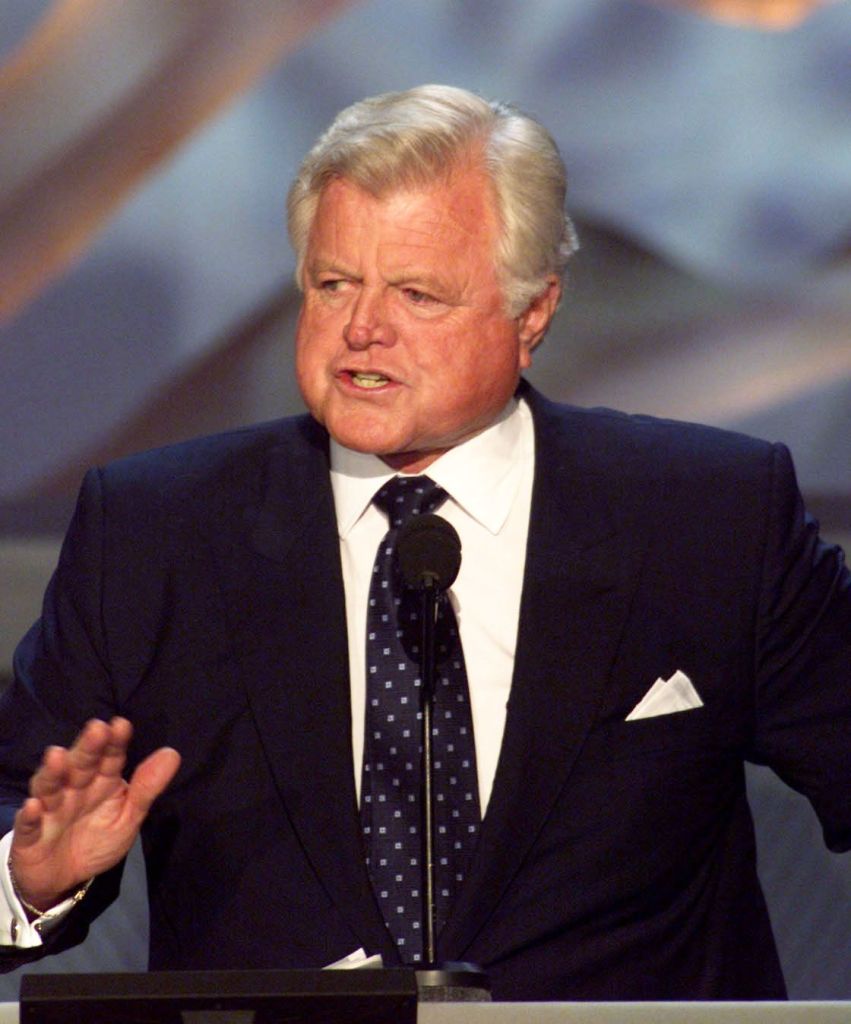
It has been a week of memories, melancholy, and musings about the past. It was one of those weeks when I needed to seek out time alone to reflect on the news and images flooding the airwaves in the aftermath of Senator Ted Kennedy’s death. The absolute necessity of solitude—on long walks or while sitting and looking out over the lake—felt essential as I contemplated the life and times of one of my political heroes. As I walked, sat, and thought, it dawned on me that I was mourning more than my favorite senator; I was also missing a part of America that had somehow slipped away into yesteryear.
Years ago at the statehouse, I knew a woman who had grown up during the Depression, married a soldier who fought in World War II, and loved and revered both Presidents Roosevelt and Truman. She read constantly about that era and often reflected on the larger‑than‑life political and military leaders who guided the nation to victory. I once told her that the History Channel focused too much on “the big war,” which only made her wonder whether I had any sense of history at all. I could never quite understand why she felt so nostalgic about what seemed to me a comparatively limited period in our nation’s story.
But now I find myself in something of the same condition she was in during the years I knew her. While my interests in history are broader—spanning continents and eras—I feel most at home with the cast of characters from my childhood and early adult years. I am certainly contemporary, but I am also undeniably nostalgic.
This week, after the news of Kennedy’s death broke, I pulled from my shelves the volume by Doris Kearns Goodwin, The Fitzgeralds and the Kennedys, and thumbed through it again. Back in 1996, when I was dealing with a medical situation that left me less than chipper, I took that book with me to my childhood home in Hancock. I remember sitting in the living room, watching the fall leaves flutter from the oaks, and immersing myself in its chapters. At that time, there were many books I could have chosen, but I felt so awful that I knew I needed the most absorbing read I could find. Naturally, I turned to a book about the family that fascinated me all my life. The Kennedys had always been a world of political excitement and drama throughout my youth. As a teenager, Ted Kennedy became the person I most respected—the philosophical model for what I believed a political leader should sound like on the issues that mattered. Like many people my age who were born in 1962, Senator Kennedy was always there to lead the charge.
And then, this week, he was gone.
As I watched the old newsreels on television, it became clear that not only was Kennedy gone, but an entire era had ended. It’s not as though I hadn’t already realized this over the years—I had, and I’ve written about it often. But somehow it felt more real, more official, with Ted’s passing. Off‑camera reporters spoke in the archival footage, and just by their voices I could identify Roger Mudd, John Chancellor, David Brinkley—and there among the grainy images was Frank Reynolds, whom I admired so much as a teenager. Today we have a wide array of reporters and anchors on the all‑news channels, but I seriously doubt that thirty years from now the sound of their voices will evoke the same instant recognition. It’s not that they aren’t hardworking; it’s simply a different time, with so many competing voices that it’s harder for anyone to rise above the crowd. And, without aiming an arrow at anyone, many simply are not—and may never be—the heavyweights whose presence is forever etched into the old newsreels that ran constantly this week.
The same is true of the political caliber of our elected officials. Many bright thinkers serve in the Senate today, but who among them will inspire the outpouring of emotion we’ve seen this week when their time comes? On the world stage, there once were figures like Mao, Brezhnev, and Thatcher. Today’s leaders—Hu, Putin, Brown—simply lack the sizzle of an earlier age.
It feels as though a chapter of a much larger book quietly turned its page this week. I will certainly continue following the latest twists and turns of the world—as a news junkie, I must—, but like the woman back at the statehouse, I will also be turning back the pages, revisiting times that feel somehow more comforting, populated by a cast of characters who were larger than life.


Leave a Reply