
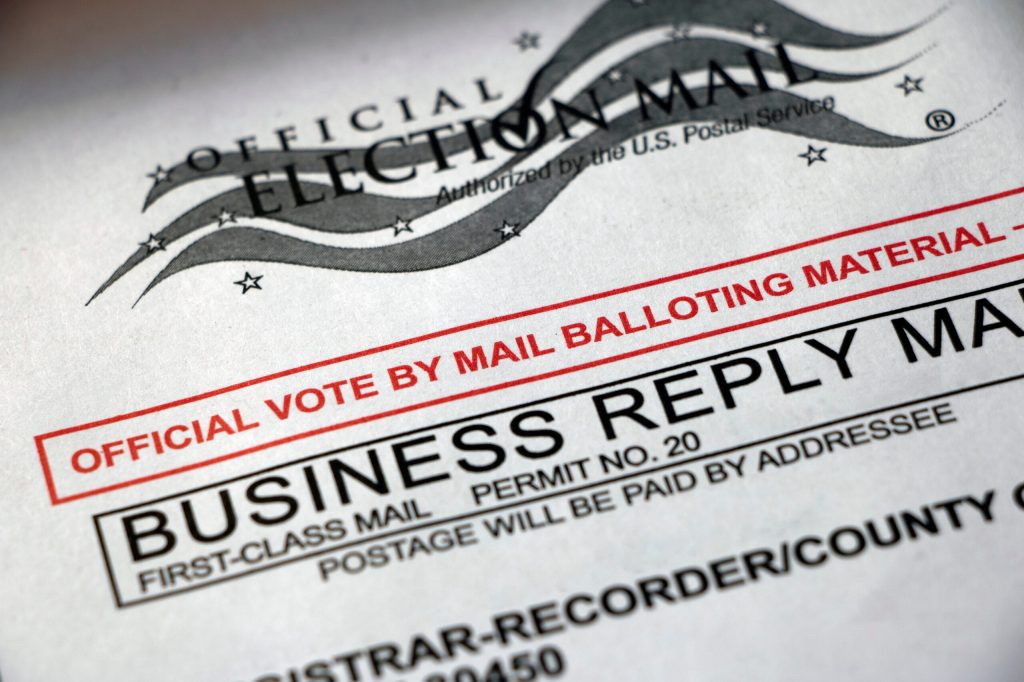
The Supreme Court is poised to decide whether states may continue accepting mail‑in ballots that arrive after Election Day. This ruling could upend long‑standing “grace period” laws in states such as California, Illinois, and North Carolina. The case, brought by (I know you will be shocked) conservative activists, argues that the Constitution’s Elections Clause bars states from counting any ballot received after polls close, even if it was mailed on time. Several states counter that Congress has never prohibited such grace periods and that rejecting timely mailed ballots would disenfranchise lawful voters, including military and overseas voters.
The pending decision comes amid intense scrutiny of last week’s California election results, where late‑arriving ballots played a decisive role in two high‑profile contests. In the governor’s race, early returns showed the Republican candidate ahead on Election Night, only for the margin to narrow as mail ballots were tallied in the days that followed. In Los Angeles, the mayoral contest drew national attention when Republican candidate Spencer Pratt, who led in initial returns, was overtaken by progressive candidate Nithya Raman once late‑arriving ballots were counted. While the shift in outcomes took place, it does not mean that shiftiness has occurred.
I come from the perspective that the electorate should vote, and while I am old-fashioned and like to walk to my polling place on election day (it is on my block), I fully understand that mail-in balloting is much easier for a large segment of the nation. As it is in California. The current mail-in rules in the Golden State have been in place for years, and the state’s 7‑day grace period reflects the realities of a large vote‑by‑mail electorate. Mail ballots postmarked by Election Day but arriving after Election Day are legally valid, and their arrival doesn’t make them any less transparent or subject to less rigorous standards than those that arrived before the election.
The Supreme Court’s ruling could have sweeping implications. I trust this conservative court does not put a partisan finger on the election process that is left up to the states to decide. If the Court strikes down grace periods, states that rely heavily on mail voting would be forced to reject thousands of ballots that were cast on time but delivered late by the Postal Service.
The idea that something nefarious is happening simply because ballots are counted after Election Day is, frankly, preposterous. States have been doing this for decades — red states, blue states, purple states — because it’s how mail works, how election administration works, and how you avoid throwing out the votes of people who followed the rules. Or does Congress wish to make sure that voters who mailed their ballots on time aren’t disenfranchised because a truck hit traffic on a main drag or a sorting center was short‑staffed? Surely, Congress does not want its prized members of the military who serve overseas and rely on grace periods even more to become disenfranchised.
It amuses me that some of the people who are easily led think election night totals are the final totals. They are not. Never have been. They are the first wave — the fastest ballots to count. Mail ballots, provisional ballots, and late‑arriving but timely‑mailed ballots come later. That’s not fraud; that’s the process. It’s the same process that has delivered Republican victories for years without a peep of protest when the late ballots happened to break their way.
Once again, some politicians are playing to the low-hanging fruit. These pols who cannot talk with credibility about the economy or a needless and dangerous war are suddenly latching onto the normal, boring, administrative reality of ballot counting. Since those pols have nothing going their way, they gin up the election process as something to consider as sinister.
Which leads reasoned people to rightly conclude that the process didn’t become corrupt; the Republican rhetoric did.


Leave a Reply