
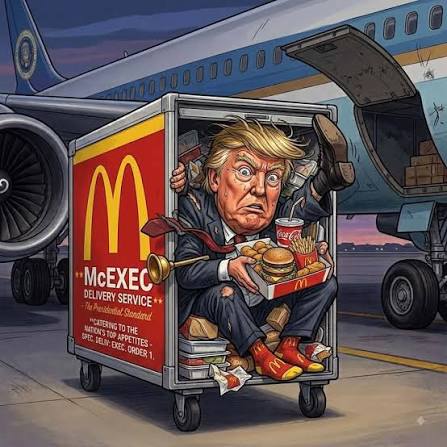
You likely found the same annoying thing when watching the Election Night returns on CNN and MS Now on Tuesday as I did. When we should have had more analysis of what was happening in Minnesota or Wisconsin, we were being told that Donald Trump, while traveling overseas recently, was warned of a credible threat to his life and advised to alter his plans to return to the United States. It comes as no surprise that Trump doesn’t just carry the nuclear codes with him but also the accumulated grievances of the world that he has created and fosters.
What I did not hear last night is a point of view that needs to be registered. Threats don’t materialize in a vacuum. They grow in soil cultivated abroad. And when American foreign policy is built on a steady diet of drone strikes, saber‑rattling, abetting genocide in Gaza, and the kind of muscular posturing from the president who never wore a uniform, it shouldn’t surprise anyone that the anger generated overseas eventually finds its way back to the president’s own doorstep.
We talk about blowback as if it’s an academic term, something reserved for think‑tank panels and footnotes. But blowback is simply cause and effect. If a nation repeatedly uses military force as its primary language in regions around the globe and threatens others with military might, the world will respond in kind. When an administration relies heavily on strikes, raids, and punitive operations, it creates a global environment in which hostility toward the United States becomes predictable.
I admit to finding it highly ironic to watch an administration that prides itself on projecting strength through the absurd antics of Pete Hegseth, as Iran was bombed without logical rationale as to why, now needing to ramp up protection from possible or probable retaliation. My dad, a WWII veteran in the Pacific Theater, had a quaint notion that in life it’s not how many guys you knock about on the schoolyard, but how few enemies you create. That is how he measured real strength. A foreign policy that relies on military action as its first instinct rather than its last inevitably generates the kind of resentment that metastasizes into threats, not just against American interests abroad, but, if we are to believe the sources from this Administration, against the president personally.
This White House has failed to recognize a basic fact of life on the world stage. Foreign policy is not a video game where actions disappear once the screen fades. Every strike, every escalation, every moment of chest‑thumping from the irksome, childlike personality of Hegseth leaves a residue. And that residue accumulates into risk.

.


Leave a comment