Tim Russert famously used a handheld whiteboard to map out potential Electoral College outcomes. To emphasize exactly which state would decide the winner in 2000, he scribbled the iconic phrase: “Florida, Florida, Florida”. In June of this year, without a whiteboard or a television show, I repeated one state to friends and folks who engage in sidewalk conversations. Iowa, Iowa, Iowa.
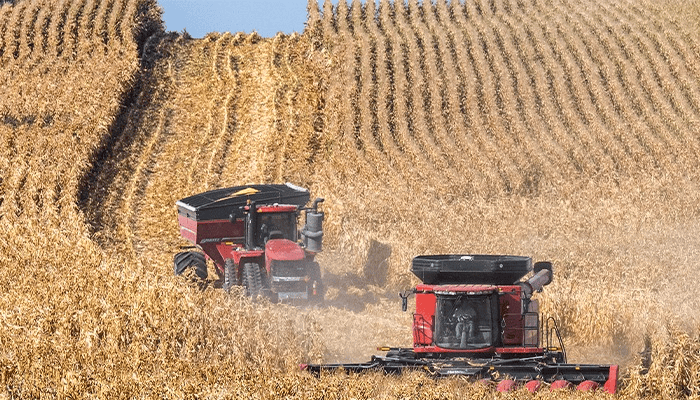
For whatever reason, the Farm Journal magazine has arrived in our mailbox over the past year. Not being a farmer, or even having heard of the publication before it landed in our mailbox, I started reading the parts that interested me. Needless to say, its content blended with the national narrative about tariffs, fertilizer prices, and general chaos in our national economy since Donald Trump took office in January 2025. Given that Iowa is a close neighbor and with their high degree of meshing agriculture with their state’s economy, the farmers there have been on my mind. Add in the midterm election, and they have really been on my mind.
I grew up in Waushara County, where farming has long been a leading force, so I’m familiar with discussions about droughts, too much rain, trade disruptions, and volatile markets. So, it is not hard to fathom how Iowa farmers are being tested by an unforgiving combination of financial upheaval and uncertainty. The economic pain has become a very real political problem for the Republican Party in the upcoming midterm elections.
Trump won Iowa by more than 13 points in 2024. But in the current Senate race, Republican Rep. Ashley Hinson is essentially tied in polling averages with Democratic state Rep. Josh Turek. In the race for governor, state Auditor Rob Sand, a Democrat, leads Republican nominee Zach Lahn by larger margins.
The numbers tell a troubling story. A major 2026 agricultural outlook produced by Iowa State University, the Iowa Farm Bureau Federation, and the Iowa Bankers Association found that Iowa net farm income fell 53 percent between 2022 and 2024. The heartland was already feeling hard times even before the tariffs and trade wars were started by Trump and his GOP Congress.
According to the Iowa agricultural outlook, the share of financially vulnerable farms rose from 7.7 percent in late 2022 to 19 percent by the end of 2025. Credit demand is increasing, farm bankruptcies have climbed, and many producers report feeling trapped in a cost-price squeeze, with expenses remaining high even as crop prices weaken.
Voters in Iowa, in large part, chose to embrace conservative Republicans over the years. They have often looked away when the obvious correct choice was presented to them and opted for the most absurd on the ballot. But something has changed in measurable ways over the past year. Those same voters are far less forgiving when economic conditions deteriorated and struck at their bottom lines. (We cannot forget many of those same voters supported racism and outright xenophobia when it was on the ballot in recent elections.) So we are mindful of those who profess conservative positions now finding fault with the ones hurting the family farming operation. I never said this column was about virtue.
I strongly suspect that the farmers who feel abandoned by federal policies, frustrated by trade uncertainty or squeezed by market conditions will decide to send a message on Election Day. I am not predicting that Iowa will become a Democratic stronghold. But I know the tallies at the margins make or break a candidate. That is why the GOP is now sweating over what to do. That is why even a small erosion of Republican support among frustrated farmers, combined with energized Democratic turnout in urban and suburban areas, could make news as the ballots are counted.


Leave a comment