
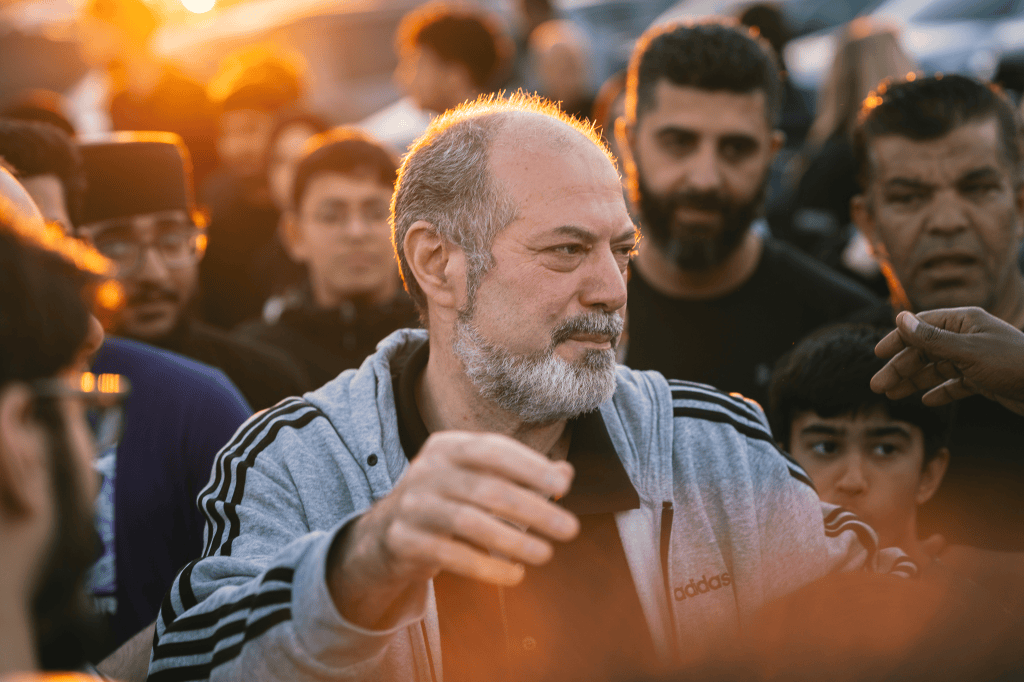
We all grew up with the same lesson driven home in our classrooms, whether in central Alabama or in the heart of a New York City classroom. People should not fear government punishment because of their political views. That principle is now being severely tested in the case of Salah Sarsour, the longtime president of Wisconsin’s largest mosque, and the result should alarm anyone who values free speech, religious liberty, and the strength of our families and our communities.
A federal immigration judge ruled Wednesday that Salah Sarsour, president of the Islamic Society of Milwaukee, can be deported. Judge Jayme Salinardi rejected accusations made by the Department of Homeland Security that Sarsour lied on his green card application over 30 years ago, and that he registered to vote despite not being a citizen. Salindari did, however, give what Sarsour’s attorneys called “extreme deference” to a 2025 memo by Secretary of State Marco Rubio stating that Sarsour — a vocal advocate for Palestinian rights — is deportable “because his actions undermine” U.S. foreign policy.
The same morning Salindari ruled on Sarsour’s case, he announced his retirement. A different immigration judge will preside over further proceedings in Sarsour’s case. During a press conference Wednesday, attorneys representing Sarsour called the decision “unjust,” and said the timing of Salindari’s retirement announcement was “odd.”
Let’s be clear about what makes this case truly troubling. The government did not ultimately prevail over claims that Sarsour obtained his green card through fraud. Those allegations were rejected. Yet a man who has lived in the United States for more than three decades, built a life in Wisconsin, led a religious institution, and has become a fixture in his community now faces removal because of speech and advocacy surrounding Palestinian rights. The same rights for Palestinians that so many of us have pressed for over the decades, too.
The same civics classrooms from Alabama to the heart of NYC also taught us that free speech does not exist to protect popular opinions. It exists to protect controversial opinions. If expressing views on a contentious international conflict can become grounds for exile, then free expression becomes conditional on political acceptance. The Trump Administration is constricting the First Amendment from what we grew up knowing was a shield protecting dissent into a privilege granted by those in power.
Muslim Americans, Arab Americans, immigrants, and advocates across the political spectrum are being told to not speak too loudly. Do not challenge official policy too aggressively. Take the wrong side in a controversial debate, and you may face consequences. You may find government power aimed directly at you.
During large swaths of the attacks on Gaza by Israeli Defense Forces and the outrageous policy moves of the Israeli government, our home flew the Palestinian flag. There was a constant stream of conversations flowing for that decision, but only one was hostile and came from someone who self-identified as “ a Zionist”. I had seen him on the UW-Madison campus several times. Everyone else who saw our flag and understood the message knew that healthy democracies do not fear debate. They do not fear voices declaring what must be stated and heard.
I wrote the following in June 2025.
So, what is happening regarding Sarsour, I argue, must be seen as more than the fate of one man. This is a test of whether our constitutional promises are real or merely performative and decorative.
Either we believe in the rule of law. Or we don’t.
American values are not abstract slogans. They are not suggestions. They are obligations. They require us to defend the rights of people we may not know personally, whose politics we may not share, whose stories may be unfamiliar. They require us to reject the idea that the government can detain someone simply because their activism makes the powerful uncomfortable. They require us to insist that the law apply evenly, not according to the shifting winds of foreign policy or the prejudices of the moment.
Look, if we allow partisan fears to dictate whose rights matter, then the entire architecture of liberty becomes conditional, and conditional liberty is no liberty at all. If the government can target a respected community leader for his political commitments, then no one’s rights are secure. Maybe not even mine for flying the Palestinian flag.
The true test of America’s commitment to liberty is not how it treats voices everyone applauds. It is how it treats voices that make people uncomfortable.


Leave a comment